




Individual courses
Based on the firm belief that academic excellence should not be limited to those studying for a degree, the university takes pride in offering further education programmes (leading to Certificates of Advanced Study) and Individual Courses to anyone wishing to be immersed in the intellectual heritage of the Dominicans.
Certificates of Advanced Study and individual courses are validated in the same way as Bachelor level courses. A paper of 12000-16000 characters, including spaces is required for each course. The study duration for a certificate is 12 months, according to the pace and rhythm of each student, under supervision by a tutor.
Choose between:
- 15 Certificates of Advanced Study, in Theological or Philosophical Studies
- Over 500 Individual Courses
Choose your course by using the search engine and click on the title to see the detailed outline.
- Accompanied courses – you have access to the learning platform and your studies will be supervised by an academic tutor. These courses are worth 3 ECTS credits which can be counted towards a study programme with Domuni or at another academic institution.
- Read only courses: you will receive the PDF of your chosen course within 48 hours
Courses search
International Humanitarian Law [2620]
The course seeks to explain the concept, nature and history of International Humanitarian Law (“IHL”) in such a manner that the student will become familiar with its operations in international law.
International Marketing (SHS-MRKE03)

This course will cover some fundamentals questions: Why companies should go international? Is it a benefit for them? Whatis an international product strategy? How can a company adapt its product to the new market? Should we create a new product or maintain a similar product?
International Public Law [2611]
This course provides an introduction to public international law, its historical development, legal foundations and role in an increasingly globalised international system.
International Refugee Law and Legal Frameworks for Asylum [2618]
International refugee law and the legal framework governing asylum constitute normative responses to the forced displacement of populations caused by armed conflict, persecution, large-scale human rights violations or environmental crises.
Introduction to Catholic Tradition

This course gives a survey on the Catholic tradition by examining a series of documents like Lumen Gentium and other documents of Vatican II.
Introduction to Christianity (ENREL03)
This introductory course studies the foundational doctrines of the Christian. It offers an overview of the interrelated doctrines about God, creation, the Bible as the central text of Christianity, human beings and sin, the person and work of Jesus Christ, the Church as Christ’s Body, and the Christian doctrine of the last things. While there is a stress on the evangelical Christian perspective in this course, there will also be key interactions with the Roman Catholic and mainline Protestant Christian traditions.
Introduction to Critical Thinking [2492]
This course provides an introduction to critical thinking through the study of epistemology, or the philosophy of knowledge. It examines the nature, validity, and limits of human knowledge by exploring fundamental concepts such as truth, certainty, judgement, evidence, and the relationship between the knowing subject and reality.
Introduction to critical thinking. Part I

Etymologically, the word "Epistemology", from the Greek, means the science of knowledge. It is an investigation of knowledge and its problems. A synonymous term is Criteriology which again from the Greek means to distinguish or judge. It deals with testin g knowledge to find truth or detect error.
Introduction to critical thinking. Part II
The modern epistemological problem has two aspects:
1. The opposition between science and philosophy or truth and error. We find this basically in Descartes and Kant.
2. The conflict between science and science or that of contemporary and classic physics and not an opposition between science and philosophy or truth and error.
Introduction to Fundamental Theology

We derive our inspiration from at least two distinct traditions: the Jewish and the Christian. It is important that we should be aware of this! A whole set of questions are implied here. What is the relationship between God and the Jewish traditi on, God and Jesus, God and the church?
Introduction to Islam (ENREL05)

This course is divided into 8 chapters, each covering different aspects of Islam.
Introduction to Marketing

This course provides some insight about principles of Marketing.
Introduction to Moral theories in Bioethics I

This course will introduce the students to the historical beginning of bioethics, as well as some of the moral theories employed in bioethics discourse.
Introduction to Moral theories in Bioethics II

This course is the second part to Introduction to Moral theories in Bioethics I.
The course will introduce the students to the historical beginning of bioethics, as well as some of the moral theories employed in bioethics discourse.
Introduction to Philosophy of Law [2507]
This course introduces students to the philosophy of law by examining the nature, purpose, and justification of legal systems and their relationship to morality, politics, and society.
Introduction to Philosophy [2254]
![Introduction to Philosophy [2254]](/media/photologue/photos/cache/2254_introduction-to-philosophy-asignatura_icono.png)
This course introduces philosophy as a rigorous academic discipline concerned with fundamental questions about existence, knowledge, values, reason, and human life.
Introduction to Plato and Aristotle [2483]
This course introduces the two great founders of Western philosophy through their complementary approaches. The first part explores Plato’s thought, focusing on the search for truth, virtue, the immortality of the soul, and the Theory of Forms, while highlighting the central role of Socrates, dialogue, and dialectical inquiry.
Introduction to Sacred Scriptures

The course aims at furnishing the student withe the appropriate tools for a meaningful of the Biblical text, with particular reference to its spiritual, liturgical and pastoral context. The course will further aim at providing a basis familiarity with, and a critical assessment of contemporary exegetical methods.
Introduction to Saint Paul
An introduction to the Life, Epistles and Theology of Saint Paul.
Introduction to the Gospel of Mark
The Gospel of Mark is distinctive within the New testament. It may be the oldest Gospel, but it post-dates some of Paul’s letters, from which we already have a good picture of the preaching of Peter and Paul. Mark paints Jesus in down to earth human form, willing to change his mind, vulnerable to the opinions of others, and especially those of the ones who opposed him.
Introduction to the Pentateuch

All the Bibles, either Hebrew or Catholic or Protestant or Orthodox, agree on the first part of the Biblical Canon, that is the Pentateuch.
Introduction to the Protestant Tradition

This course helps us to get in touch and explore with the this 16th century religious movement the originated in western Europe over against the prevailing Roman Catholicism.
Introduction to the Synoptic Gospels - Part I

How are the Gospels of Mark, Matthew and Luke interrelated? Did Matthew and Luke both use a written source 'Q' and Mark, when composing their Gospels? Did they each have their own sources as well?
Introduction to the Synoptic Gospels - Part II
This course introduces you to the debates about the meaning of the Gospels of Matthew, Mark and Luke/Acts. What were the theological interests of the authors of the Synoptic Gospels?
Introduction to the Synoptic Gospels - Part III
What is the Jesus presented in the Gospels of Matthew, Mark and Luke like? How did he understand himself? How did the Evangelists understand him? Is that the same or different to the understanding of the disciples?
Introduction to Theology

This course will provide a general introduction to Theology.
Issues In Epistemology and Philosophy of Science [2509]
This course offers an advanced introduction to contemporary epistemology and the philosophy of science through a critical examination of scepticism, epistemic justification, and the nature of scientific knowledge.
Issues in Genomic Research

A Systematic Review and Hermeneutic Exploration of the Management of Incidental Findings in Genomic Research
Jacques Dupuis' Theology of Religions
In order to have a better understanding of Dupuis’ viewpoints, the study will put side-by-side Dupuis’ ideas and those of pluralism, exclusivism and inclusivism. For this reason, the three approaches to the theology of religions will be briefly discussed. Likewise, the study also briefly presents the understanding of the Congregation for the Doctrine of the Faith (CDF) concerning the issues raised.
Jesus Christ and the World Religions
The Unique and Universal Mediation of Jesus Christ in Relation to the Theology of Religions
Jewish Heroines of the Deuterocanonical Books of the Old Testament: A Study of Judith, Sarah and Esther

Students will be introduced to the methods known as Rhetorical Biblical Criticism and Theological Criticism of the Bible.
John Locke's Epistemology and Political Philosophy [2497]
This course offers a rigorous and engaging exploration of John Locke’s philosophy by closely integrating his political thought and epistemology through the study of his major works, particularly Two Treatises of Government and An Essay Concerning Human Understanding.
Kant: A philosophy of Freedom
According to Gibelin in his Foreword to Religion within the Limits of Reason Alone, Freedom is the central theme of Kant’s philosophy. This course will introduce to Kant, centering on Freedom as a key concept to understand his philosophy, in the three spheres defined by the critical project: Metaphysics, Moral and Aesthetics.
Kant’s Critique of Pure Reason [2500]
This course offers a comprehensive introduction to Immanuel Kant’s Critique of Pure Reason, highlighting its revolutionary impact on the history of philosophy.
Latin - Part I
Declensions, conjugations, ablative, gerundive... an introduction to the Latin language, mother of Romance languages.
Latin American Philosophy 20th Century [2501]
This course explores the major philosophical currents that shaped Latin American identity throughout the 20th century.
Liturgy
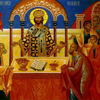
Liturgy is primary theology.
Liturgy Part One
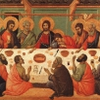
The course provides the theological and historical foundations for understanding the evolution of Christian liturgical forms, and pastoral practice. The course will examine the major moments in the historical development of the liturgy in both East and West from the New Testament era with its Jewish foundations to the present.
Liturgy Part Two
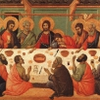
The course will examine the major moments in the historical development of the liturgy in both East and West from the New Testament era with its Jewish foundations to the present. Attention will be given to the role of ritual and symbol in human life, the relationship of liturgy to society and culture, and critical approaches to liturgical practice.
Management and Organizations

Organizations are conceived as systems and as such are embedded in an environment.
Marketing Management

The Marketing Management course will take participants through market analysis, marketing strategy development, marketing plans delivery and the need for marketing metrics.
Marketing Research

This self-paced course consists of three modules of study. This course will provide students with links, images, and videos.
Martin Heidegger, the Notion of Being: A Reconstruction and Reversal [2508]
This course offers a comprehensive introduction to Martin Heidegger’s philosophy through a study of his central question: the meaning of Being.
Mediation in Conflicts [2625]
This course presents mediation as a conflict-resolution process based on dialogue, responsibility, and the parties’ autonomy, while respecting their dignity.
Message to Movement : a preaching intensive (SEM149)
E-seminar in Theology
Metaphysics - Part 1
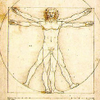
Metaphysics is the study of things in their ultimate causes. As such, the specialty of metaphysics is that it seeks the final explanation or the ultimate causes of things precisely in so far as they are, in so far as they exist, or in so far as they are real. Aristotle called it “First Philosophy” or “Theology” since it leads to the first principle or the ultimate explanation of all things.
Metaphysics - Part 2
All human knowledge begins with sense experience but can terminate sometimes in the senses, or in the imagination or in the intellect alone . Accordingly we can distinguish between three levels of scientific knowledge corresponding to the three degrees of abstraction from matter which can be made by the intellect in its examination of reality.
Metaphysics or Philosophy of Being [2486]
This course offers a systematic introduction to Metaphysics, or the Philosophy of Being, the branch of philosophy that studies being as being and investigates the ultimate causes and principles of reality.
Metaphysics [2487]
This course offers a systematic introduction to Thomistic metaphysics by examining being in its most universal sense and the fundamental principles that explain reality.
Methods in Ecumenical Dialogue

Ecumenical dialogue requires a methodology to move from disagreement to consensus.
Midrashim: technique, corpus and exegetical work (TH211)
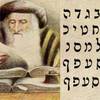
The goal is to understand the differences between halakhic and aggadic midrashim, exegetical and homiletical midrashim, midrashim and targumim.
Migration and Sustainable Development Goals [2629]
This course examines the relationship between migration and sustainable development, focusing on the continuing debate over whether migration and diaspora communities promote or hinder development.
Missionary organization in Latin America
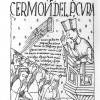
The christian conscience and colonization within the context of the missionary organization in the ‘new world’ “the case of the spanish Latin America”
Monasticism in Buddhism and in the Catholic Church
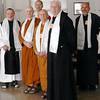
Common elements of Monasticism in Myanmar Buddhism and in the Latin Catholic Church, in preparation for an Interreligious Dialogue : a Comparative Study
New Testament Events
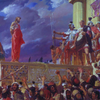
This course is part of the book of Bieke Mahieu, Between Rome and Jerusalem. Herod the Great and His Sons in Their Struggle for Recognition: A Chronological Investigation of the Period 40 BC-39 AD, with a Time Setting of New Testament Events. Orientalia Lovaniensia Analecta 208. Leuven: Peeters, 2012.
New Testament Greek 1
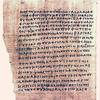
This course will provide a general introduction to the language of the New Testament.
New Testament Greek 2
Prerequisite: completion of NT Greek 1 with a minimum grade of 12/20 or previous study of New Testament Greek.