




Individual courses
Based on the firm belief that academic excellence should not be limited to those studying for a degree, the university takes pride in offering further education programmes (leading to Certificates of Advanced Study) and Individual Courses to anyone wishing to be immersed in the intellectual heritage of the Dominicans.
Certificates of Advanced Study and individual courses are validated in the same way as Bachelor level courses. A paper of 12000-16000 characters, including spaces is required for each course. The study duration for a certificate is 12 months, according to the pace and rhythm of each student, under supervision by a tutor.
Choose between:
- 15 Certificates of Advanced Study, in Theological or Philosophical Studies
- Over 500 Individual Courses
Choose your course by using the search engine and click on the title to see the detailed outline.
- Accompanied courses – you have access to the learning platform and your studies will be supervised by an academic tutor. These courses are worth 3 ECTS credits which can be counted towards a study programme with Domuni or at another academic institution.
- Read only courses: you will receive the PDF of your chosen course within 48 hours
Courses search
E-Seminar : Proclaiming Holy Scriptures

E-seminar in Theology
by David Pereyra
From 17th April to 12th June 2023
E-seminar : State of Human Rights in the Contemporary World (SEM120)

E-seminar in Human Rights
Isaac Mutelo
From 14 April to 8 June 2025
E-Seminar : Women, justice, recognition and religion. Thinking these concepts together from Martha Nussbaum

This e-seminar in Philosophy will take place from 30 September to 24 November 2024. Dive into contemporary struggles with Maxime Allard. Justice, recognition, religion: three inseparable concepts for understanding the place of women today. Martha Nussbaum serves as our compass, with her insights that shed light and inspire action. This seminar invites you to question the mechanisms that are still blocking the recognition of women in the world.
E-seminar- Religious Exemptions in Liberal or Democratic States

SEM 43 - Philosophy and religious Studies
April 20th - June 15th, 2020
presented by Isaac Mutelo
E-Seminar: American crisis and its implications

E-seminar in Social Sciences
by Lorenzo Gallo
From 2nd october to 27th november 2023
E-Seminar: An Introduction to Asian Church History I

E-seminar in Theology
by Adrian Judd
From 3rd October to 28th November 2022
E-seminar: Analytical Jurisprudence: Theories and Practical Application

E-seminar in Philosophy and Law
by Isaac Mutelo
From 3rd October to 28th November 2022
E-Seminar: Artificial Intelligence and Robotics: Ethical Issues (SEM132)

This seminar will take place from 6th October to 30th November 2025. It explores the ethical implications of artificial intelligence (AI) and robotics by engaging with key ethical issues and aspects, including privacy, autonomous systems, job displacement, algorithmic bias, surveillance issues, and the moral status of machines.
E-Seminar: Contemporary Issues in Homiletics

SEM49 - Practical Theology / Homiletics
4th October - 29th November 2021
presented by Emmanuel Dumont, op
E-seminar: Economy and Theology

This e-seminar in philosophy and theology will take place from 30 September to 24 November 2024. With Srecko Koralija, economics meets theology. This seminar examines the links between economic principles and Christian values. Revisit concepts such as social justice, sustainability and the critique of capitalism through a theological lens. This is a seminar that will leave no one indifferent, as it raises fundamental questions about how the economy influences our lives.
E-Seminar: Gender Equality: Culture, Religion and Politics

E-seminar in Philosophy/Religion
by Isaac Mutelo
From 02 october to 27 november 2023
E-seminar: Indian Logic

SEM - Philosophy
5th October - 30th November 2020
presented by Rajen Lakra
E-seminar: Issues in African Philosophy and Theology

SEM - Philosophy and Theology
5th October - 30th November 2020
presented by Cornelius Ewuoso
E-Seminar: Learning to Dwell

E-seminar in Philosophy
by Jaco Kruger
From 17th April to 12th June 2023
E-Seminar: Natural Law: its origin and implication

E-seminar - Philosophy and Natural Law
by Lorenzo Gallo
From 5th to 26th July 2021 - Summer Course
E-Seminar: Orthodox theology and the future of ecumenical dialogue

E-seminar in Theology
by Jesmond Micallef
From 12th April to 7th June 2021
E-seminar: Our Doors Are Open. Welcoming People with Disabilities at Places of Worship

SEM66 - Seminar in Theology
4th October - 29th November 2021
presented by David H. Pereyra
E-Seminar: Read and think with Minima Moralia by Theodor Adorno (SEM128)

This e-seminar in Philosophy will take place from 6th October to 30th November 2025.
E-Seminar: Reading and Understanding the Additions to Daniel

E-seminar in Theology
by John J. Lynch
From 02 october to 27 november 2023
E-seminar: The Dignity of the Human Person

E-seminar in Philosophy and Social Sciences
by Jaco Kruger
From 11th April to 6th June 2022
E-seminar: The Gospel Across Cultures: Greek, Latin, and Syriac Patristic Perspectives (SEM 124)

E-seminar in Theology
Srecko Koralija
From 14 April to 8 June 2025
E-Seminar: The miracle narratives in both the Old and New Testaments

E-Seminar in Theology
From October 6 to November 30, 2025
E-Seminar: The Role and Relevance of Religion in the Contemporary World

E-seminar in Religion
by Isaac Mutelo
From 15 April to 10 June 2024
E-Seminar: Upholding Human Rights and Justice Today: Religion, Media, and NGOs

SEM48 - Human Rights, Philosophy and Religious Studies
4th October - 29th November 2021
presented by Isaac Mutelo
Early Christian Art
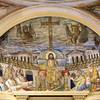
This course critically reviews early Christian and Byzantine art from the 2nd to 6th Century.
Early Christian-Muslim Relations (ENREL07)
A study of the history of Arab Christianity, the Advent of Islam in the East, the cultural contributions of Arabic-speaking Christians, early Christian-Muslim theological conversations, and the beginnings of Christian theology in the world of Islam.
Eastern Church history and cultural landmarks

This course will look at some issues of theological controversy between East and West.
Ecclesiology

This course explores the mystery of the Church as seen in the light of Vatican II.
Ecumenical Biblical Hermeneutics

The aim of this first set of readings is to gain familiarity and/or to review the literary history of the Bible: namely, religious, socio-political, cultural factors which shaped the structure and content of both testaments.
Ecumenical Hagiology

In the lives of the sains lifes " lives" the Christian vision of God, man, and the world which stand all out very clearly. Men can learn almost as much about the real meaning of Christianity from the legends of the saints produced within the tradition of the Church as from the authentic lives themselves. Through the reading and studying the lifes of the saints who arrived before us in the promised land, we came to know how God works in the daily lives of Christians and how faith can be lived not only in good times but especially during persecution and suffering. This helps us to appreciate more our faith and make us grow in loving our brothers as part of God's providence.
Ecumenical Theology

As reasoned discourse about God ecumenical theology is focussing on God’s will for unity among Christians.
English for Economics (SHS-ETC09)

This course aims at expanding students’ vocabulary and improving their understanding of the body of knowledge in Economics.
English, language and culture (EDOMU1111 (SHS-LANG01))

This course is aimed at students who have a level B1 (CEFR) or higher in English.
Environmental Protection in Armed Conflicts [2622]
Environmental degradation is one of the major consequences of armed conflict worldwide. The first part of the course, “The Environment as a Method of Warfare?”, provides a syntactic and semantic analysis of the key concepts contained in the course title, namely protection, the environment and armed conflict.
Epistemology [2480]
The aim of this course is to provide students with a systematic and comprehensive introduction to some of the key themes in Epistemology (the theory of knowledge). The course gives a good introduction, then moves to the analysis of “knowledge” in general, with an introduction of historical elements in the development of Epistemology (begins with Gnoseology and the Epistemology).
Ethics of Artificial Intelligence and Robotics [2490]
This course provides a comprehensive introduction to the ethics of artificial intelligence (AI) and robotics by combining conceptual, analytical, and ethical perspectives.
Ethics: from Ancient to Modern [2277]
This course offers a structured and rigorous journey through the history of ethics, from Plato to contemporary utilitarianism, in order to highlight the diversity of possible foundations for morality.
Financial Management

To understand the basic notion on financial management specially on the key principles of finance, the important role that financial markets have on the economy.
Food Governance and Development Goals

The course introduce the students to the complex architecture of the global food governance, its historical evolution and the inherent challenges.
Foundations of Ethics [2527]
This course introduces the philosophical foundations of ethics through a close reading of the major works of Plato and Aristotle. It begins by defining ethics as a branch of philosophy concerned with the rational search for the good, before examining the origins of ethical thought in ancient Greece.
Foundations of Moral Theology

The aim of this course is to discuss the precepts, principles, and values of Catholic morality.
Four aspects of being Jewish (ENREL06)

Understanding the reality of being Jewish requires recognizing the main aspects of the notion of “Jew.” Is it a faith, a civilization, a heritage, a nation, or all of these at once? We face a polysemy that defies simple conceptualization.
Fundamental Moral Theology

Distinctions need to be made regarding the subject of moral theology : first – as distinct from moral philosophy or ethics; second – as distinct from other theologica l studies.
Gerald O'Collins' Understanding of Symbols, Experience and Divine Revelation
An Accommodation for a Christian Approach to the World Religions and Interreligious Dialogue in the Line of Jacques Dupuis
Historical Books of the Old Testament

In this course we look at the Hebrews’ arrival in the Promised Land and continue right up to the end of their existence as an independent nation when disaster overwhelmed them.
History of the Ecumenical Movement

Like all movements, ecumenism had its beginnings and thus it has a history to be studied.
Human Dignity [2614]
This course examines human dignity as a legal principle within the framework of the European Convention on Human Rights.
Human Rights 1. Individual and group rights

Often legislation is based on the consensus of the majority feeling of a group of people rather than on solid philosophical and theological arguments. This frequently leads to superficial legislation with short term benefits for a group of people, but long-term misery for all. The author of this book provides us with a foundation upon which healthy legislation can be built.
Human Rights in Africa [2615]
This course provides an introduction to human rights in Africa, beginning with the concept of rights and the different categories and forms they may take.
Human Rights Part II: The catholic social teaching

Human dignity based on the concepts of the image of God and Christ’s redemption becomes the basis for human rights debate from a Christian theological perspective. It is in the community of the human family that a human person realizes his/her being the imago Dei.
Human Rights [2616]
This course examines human rights from a holistic perspective, seeking to reconcile individual and collective rights through a Christian understanding of the human person.
Human Rights [2616]
This course examines human rights from a holistic perspective, seeking to reconcile individual and collective rights through a Christian understanding of the human person.
Humanitarian Action: Philosophy, Ethics and International Protection [2626]
This course offers a comprehensive, multidisciplinary approach to humanitarian action, examining its historical, philosophical, ethical, economic, legal, religious, environmental and social dimensions.
Imagining Ecological Civilization (SEM137)

Explore the concept of civilization and ecological civilization, its philosophical foundations, ethical implications, and the risks of civilizational collapse.
Indian Philosophy Unit I

The main objective of this unit is to get an above all understanding of what Indian Philosophy is and in what circumstances it has developed. Though Indian Philosophy has developed in different parts of India it has many common characteristics hence the student is likely to know a few important ones. Furthermore, one should have a basic understanding of what Indian philosophy is accused of.
Indian Philosophy Unit II

What is expected from the students in this Unit is that they must be able to point out the importance of Vedas in Indian Philosophy, the classification of Vedic literature and must have a proper understanding of the Samhitās, Brāhmaṇas and Āraṇyakas. However, the Upaniśads will be dealt separately. Further, one must be acquainted with a few other important teachings of Veda such as Vedic religion, how monism developed from polytheism, and a basic understanding of what ṛta, the law of karma, the theory of creation, the institution of yajña, āśramas and varṇa is.
Indian Philosophy Unit III

By Studying this particular unit one must be able to understand what is the meaning of Upaniṣad, how it was developed from Vedas and what are its main teachings and how they reach their logical culmination in the identity of the self and the Brahman. One must also be able to understand the Upaniṣadic view point of bondage and liberation along with the cosmogony and puruṣārtas.
The main objective of the conclusion is to introduce the students to the different systems of Indian Philosophy as it deals with various philosophical thoughts of several traditions originated in Indian Subcontinent.
Indian Philosophy [2504]
This course offers an introduction to the foundations of classical Indian philosophy through its principal texts and concepts. It begins by examining the meaning of darśana and śāstra, the historical development of Indian philosophy, its major traditions, and its shared characteristics.
International Criminal Law [2621]
This course provides an introduction to international criminal law, combining its theoretical foundations with the analysis of relevant jurisprudence. It examines the sources and fundamental principles of the discipline and its relationship with international human rights law and international humanitarian law.
International Human Rights Law [2612]
This course is an introduction to international human rights law. Its focus is on the challenges and emerging issues that are of interest to both practitioners and academics in international human rights law.