



Individual courses
Based on the firm belief that academic excellence should not be limited to those studying for a degree, the university takes pride in offering further education programmes (leading to Certificates of Advanced Study) and individual courses to anyone wishing to pursue their studies with a flexible and personalised approach.
Certificates of Advanced Study and individual courses are all offered with tutoring and assessment. They are graded in the same way as Bachelor and Master level courses. Domuni offers over 1000 individual courses as well as several Certificates of Advanced Study in Theological Studies, Philosophical Studies, Human Rights, Canon Law, or Business.
Students will:
- study at their own pace, from anywhere in the world;
- have access to the learning platform MyDomuni, where they will become part of an international academic community of learners;
- be supervised by a dedicated academic tutor who will accompany them at every step of the way.
Choose your course by using the search engine and clicking on the course title to learn more about each offer.
Courses search
Philosophy of Logic Part I

Logic equips individuals with the required skills to identify errors, known as fallacies in an argument. Logic generally studies the relations the mind creates between different products or contents of intellectual knowledge; that is perceptions, propositions and arguments, and seeks to understand the different relations, which arise in the human mind when it knows things. This comprehensible course on logic is divided into two parts: the second part (sections III and IV) on formal logic focus on the core aspects of categorical syllogisms.
Philosophy of Logic Part II

Just as pertinent knowledge and expertise are required when making right decisions and choices, certain skills and rules are necessary when attempting to reason correctly. Equipping one with logical skills and rules is the major aim of logic or philosophy of logic. This comprehensible course on logic is divided into two parts: the first part (sections I and II) give an overview of logic and common informal fallacies.
Philosophy of Logic [2488]
Logic provides the tools to evaluate arguments and distinguish valid from invalid reasoning. This course introduces the philosophy of logic, from its historical development and the foundations of Aristotelian logic to its different forms, such as formal and symbolic logic. It also focuses on identifying logical fallacies.
Philosophy of Religion [2499]
The existence and nature of a Supreme Being are among the central questions of the philosophy of religion. This course examines the main arguments for the existence of God, the divine attributes, and the problem of evil. It also considers the connections between religion, science, and ethics.
Philosophy of Science

The impact of science, not only on the world we inhabit, but also on the world of philosophy, is undeniable.
Philosophy of War [2623]

War has always raised moral, religious, legal, and political questions for philosophy. This course traces how philosophers, from Plato and Sun Tzu to Clausewitz and Aron, have sought to understand and regulate the violence of war. It also shows how the transformations of warfare require this reflection to be constantly renewed.
Political Economy of Development [2628]

Political institutions, economic structures and policy choices shape development outcomes in the Global South. This course examines these links through the “new” political economy of development. It focuses in particular on the model of the developmental state, inspired by the East Asian economies, and on the natural resource curse.
Political Philosophy: An Introduction [2502]
State, justice, liberty, rights, and authority are among the core concepts of political philosophy. This course introduces the discipline and traces its historical development, from Plato to contemporary thinkers. It then focuses on the relationship between religion and state, illustrated through concrete cases.
Principles of Accounting

A study of accounting concepts and their application in transaction analysis and financial statement preparation and analysis.
Principles of Leadership

Completing this course will be valuable for your future career in a sense that you will be able to build your unique way of managing people and analyzing your Business environment. By applying the concepts that we will discover together, you will be able to focus on the interests of your company while building a more holistic approach to interpersonal relationships.
Prophets Part I
An Introduction to the Prophetical Phenomenon
The prophets understand themselves as inspired by God and claim that what they say is word of God. This is obvious from the very frequent formula they use « Thus speaks the Lord »...
Prophets Part II
Minor Prophets
Study of the Writing Prophets in Chronological Order
Prophets Part III
Isaiah, Jeremiah, Ezekiel
Study of the Writing Prophets in Chronological Order: from the Exile to the New Testament
Reading John's Gospel with Thomas Aquinas

Journey through the mind of Thomas Aquinas as you read the Gospel of John. This course introduces you to the theological thinking of the 'Angelic Doctor'.
Regional and International Children's Rights Law [2617]

The Convention on the Rights of the Child marked a turning point by recognising the child as a subject of rights. This course presents the international and regional frameworks for protecting children’s rights, including the African and European systems. It also examines the mechanisms designed to ensure their implementation.
Sacramental Life Part I

Part One includes: Baptism, Confirmation, Eucharist.
Sacramental Life Part II
Part Two includes: Anointing, Reconciliation, Marriage, Ordination.
Scriptural Reasoning (ENREL04)

Scriptural Reasoning is an interfaith practice where small groups of people from different religious traditions meet to read and discuss passages from their sacred scriptures together. It is not a debate aimed at proving one religion right or another wrong.
SEM31 - The Trinitarian Theology of St Thomas Aquinas
This eight-week seminar will investigate some key elements of the Trinitarian theology of St. Thomas Aquinas. We will explore the mystery of the Trinity through several fundamental texts of the scholastic tradition.
From 8th October 2018 to 2nd September 2018. Seminar closed
SEM39 - Colonialism and mission in sub-Saharan Africa

History of Christianity Seminar
April 22nd - June 16th, 2019
presented by Philippe Denis
FROM 22ND APRIL 2019 TO 16TH JUNE 2019. SEMINAR CLOSED
Social Political Philosophy [2506]
Social and political philosophy asks how collective life should be arranged, from the distribution of goods to the balance between authority and individual freedom. This course traces the main theories in this field, from the Greek Sophists to the twentieth century. It also compares modern ideologies and contemporary movements, such as utilitarianism, Marxism, and libertarianism.
Sufism [2651]

At once a doctrine, an initiatory path, and a spiritual experience, Sufism is the mystical dimension of Islam. This course presents its history, major figures, and practices, such as dhikr. It thus helps students understand the diversity of Sufism and its development within Islam.
The Beginnings of Islam: From Pre-Islamic Arabia to the Golden Age of the Abbasids [2653]
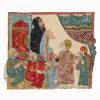
Recent findings in history, archaeology, and epigraphy have shed new light on the origins of Islam. Drawing on this research, this course traces the first two centuries of Islam, from pre-Islamic Arabia to the Abbasid Golden Age, while highlighting the limitations of the available sources. It examines in particular the figure of Muhammad, the major Arab conquests, and the development of the institutions of classical Islam.
The Book of Esther

The story of Esther
The Book of Judith

The book of Judith is named after its main hero whose achievements it tells and glorifies. Like the books of Tobit and Esther, the book of Judith focuses on a main character and tells in detail the salvation given by God in a critical situation.
The Book of Tobit

The name which designates the book has not always been the same through the centuries. The name « Tobiah » in English or « Tobie » in French comes from the Latin Vulgate which gives the same Latin name, Tobias, to the father and the son. It has been used in the past decades but is generally no longer in use.
The Centrality of the Cross in Hans Urs Von Balthasar’s Christology
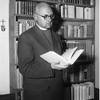
This course focuses on the centrality of the Cross in Hans Urs von Balthasar’s Christology.
The Creed

The Creed (divided in 12 parts)
The economic thought of Thomas Aquinas (SEM147)

Explore Thomas Aquinas’s contributions to economic thought, examining the morality of transactions, economic ethics, and the historical context of medieval economics.
The Epistles of John

This course places the Epistles of John within their context in the New Testament with the Gospel of John. It invites you to think for yourself about the meaning of the texts, and the relationship between the Epistles and the Gospel.
The Gospel of John and the Odes of Solomon
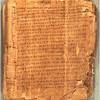
The Odes of Solomon are a collection of 42 Christian hymns from the late first or early to mid-second centuries. They were composed in Syria and known from Egypt to Rome. They celebrate Christ as the Logos, the Virgin Birth, the Trinity, the crucifixion and descent of Christ into Hades. Discover these Odes and their meaning.
The Gospel of St John

The principal aim of the course will be to furnish an appreciation of Johannine literature as Good News, with particular reference to the theological perspective of the author. The course will further aim at providing a basic familiarity with, and a critical assessment of, contemporary critical thinking on the Johannine writings, particularly the Gospel of John.
The New Testament as Jewish Literature

We propose to define each term of the title, in order to understand the cultural background that was the matrix of Christianity.
Bible seminar from April 9 to June 3, 2018
The New Testament in the Light of Rabbinical Literature (THEN162)

Jesus of Nazareth did not teach in a cultural vacuum: he and the Sages of the Talmud (successors to the Pharisees) shared the common context of Second Temple Judaism. This course offers an insight into this shared historical and religious universe, to better understand the links and differences between the message of Jesus in the New Testament and the Jewish rabbinical tradition. It highlights how these two great traditions respond to and influence each other, while following distinct paths.
The Origins of International Law: The School of Salamanca [2613]

The School of Salamanca played a key role in shaping modern legal thought, drawing on the concept of natural law. This course focuses in particular on Francisco de Vitoria and his reflection on the free movement of persons and goods. It then follows the reception of these ideas in Grotius and Locke.
The Origins of Philosophy [2479]
Philosophy has remained a central intellectual discipline since its origins in ancient Greece. This course introduces its nature, purpose, and main areas, as well as its relationship with other fields, particularly theology. It also examines the figure of Socrates, whose life and thought embody the pursuit of truth and wisdom.
The Origins of the Quran I
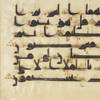
This course introduces to the history of the text of the Quran, to its language and style, and to the traditional "Qur'anic sciences".
The Origins of the Quran II
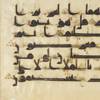
This course introduces to the history of the text of the Quran, to its language and style, and to the traditional "Qur'anic sciences".
The Philosophy of Benedict Spinoza: Rationalism, Substance, and the Ethics of Freedom [2496]
Benedict de Spinoza (1632–1677) is one of the central figures of early modern rationalism. This course studies his philosophical system through his major works, including the Ethics and the Theological-Political Treatise. It places his thought in dialogue with thinkers such as Descartes, Leibniz, and Hegel, and highlights his conception of freedom as grounded in understanding.
The Quran: An In-Depth Introduction [2654]

Approached as a historical, textual, and cultural object, the Qur’an is studied in this course from an academic perspective, distinct from confessional readings. The course explores how Muslims have understood and transmitted the text, the history of its composition, and its literary and linguistic features.