



Individual courses
Based on the firm belief that academic excellence should not be limited to those studying for a degree, the university takes pride in offering further education programmes (leading to Certificates of Advanced Study) and individual courses to anyone wishing to pursue their studies with a flexible and personalised approach.
Certificates of Advanced Study and individual courses are all offered with tutoring and assessment. They are graded in the same way as Bachelor and Master level courses. Domuni offers over 1000 individual courses as well as several Certificates of Advanced Study in Theological Studies, Philosophical Studies, Human Rights, Canon Law, or Business.
Students will:
- study at their own pace, from anywhere in the world;
- have access to the learning platform MyDomuni, where they will become part of an international academic community of learners;
- be supervised by a dedicated academic tutor who will accompany them at every step of the way.
Choose your course by using the search engine and clicking on the course title to learn more about each offer.
Courses search
Kant: A philosophy of Freedom

According to Gibelin in his Foreword to Religion within the Limits of Reason Alone, Freedom is the central theme of Kant’s philosophy. This course will introduce to Kant, centering on Freedom as a key concept to understand his philosophy, in the three spheres defined by the critical project: Metaphysics, Moral and Aesthetics.
Kant’s Critique of Pure Reason [2500]
Immanuel Kant's Critique of Pure Reason had a revolutionary impact on the history of philosophy. This course traces the origins of his critical philosophy and introduces its key concepts, with particular attention to his “Copernican Revolution” in the theory of knowledge. It also situates his thought in its intellectual context, including the influence of Leibniz, Wolff, and Hume.
Latin - Part I
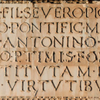
Declensions, conjugations, ablative, gerundive... an introduction to the Latin language, mother of Romance languages.
Latin American Philosophy 20th Century [2501]
Throughout the twentieth century, Latin American thinkers explored the question of their continent's identity at the crossroads of philosophy, literature, and cultural criticism. This course studies these currents through key texts from Brazil, Argentina, Mexico, and Cuba. It introduces concepts such as cultural cannibalism and the baroque imagination, through authors including Jorge Luis Borges and Octavio Paz.
Liturgy
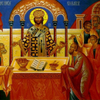
Liturgy is primary theology.
Liturgy Part One
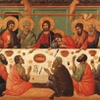
The course provides the theological and historical foundations for understanding the evolution of Christian liturgical forms, and pastoral practice. The course will examine the major moments in the historical development of the liturgy in both East and West from the New Testament era with its Jewish foundations to the present.
Liturgy Part Two
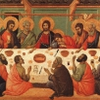
The course will examine the major moments in the historical development of the liturgy in both East and West from the New Testament era with its Jewish foundations to the present. Attention will be given to the role of ritual and symbol in human life, the relationship of liturgy to society and culture, and critical approaches to liturgical practice.
Management and Organizations

Organizations are conceived as systems and as such are embedded in an environment.

Marketing Management

The Marketing Management course will take participants through market analysis, marketing strategy development, marketing plans delivery and the need for marketing metrics.
Marketing Research

This self-paced course consists of three modules of study. This course will provide students with links, images, and videos.
Martin Heidegger, the Notion of Being: A Reconstruction and Reversal [2508]
The meaning of Being is the central question of Martin Heidegger's philosophy. This course traces the history of this question from the Pre-Socratics to Heidegger, and introduces key concepts such as Dasein, being-in-the-world, and temporality. It also examines his dialogue with major philosophical traditions and the critiques his thought has inspired.
Mediation in Conflicts [2625]

Based on dialogue and the responsibility of the parties, mediation is a process for resolving conflicts. This course presents its core principles and the role of the mediator. It also explores international and intercultural mediation, its relationship with judicial proceedings, and the “U Mediation” process.
Medieval Arabic Philosophy and Aristotle: Logic, Ethics, and Politics [2658]

Through a long process of translation, Aristotle’s philosophy reached the medieval Arab-Islamic world and contributed to the development of philosophical rationalism there. This course traces this transmission and introduces Aristotle’s logic. It then examines how thinkers such as al-Fārābī and Averroes appropriated his ethics and politics.
Message to Movement : a preaching intensive (SEM149)
E-seminar in Theology
Metaphysics - Part 1

Metaphysics is the study of things in their ultimate causes. As such, the specialty of metaphysics is that it seeks the final explanation or the ultimate causes of things precisely in so far as they are, in so far as they exist, or in so far as they are real. Aristotle called it “First Philosophy” or “Theology” since it leads to the first principle or the ultimate explanation of all things.
Metaphysics - Part 2
All human knowledge begins with sense experience but can terminate sometimes in the senses, or in the imagination or in the intellect alone . Accordingly we can distinguish between three levels of scientific knowledge corresponding to the three degrees of abstraction from matter which can be made by the intellect in its examination of reality.
Metaphysics or Philosophy of Being [2486]
What does it mean for something to be, and what are the ultimate principles of reality? This course introduces metaphysics, or the philosophy of being, through its key concepts, such as substance, essence, existence, and causality. It concludes with an introduction to Indian metaphysics.
Metaphysics [2487]
Metaphysics, or the philosophy of being, investigates the ultimate causes and principles of reality. This course introduces its key concepts, such as substance, essence, existence, and causality. It concludes with an introduction to Indian metaphysics.
Methods in Ecumenical Dialogue

Ecumenical dialogue requires a methodology to move from disagreement to consensus.
Midrashim: technique, corpus and exegetical work (TH211)

The goal is to understand the differences between halakhic and aggadic midrashim, exegetical and homiletical midrashim, midrashim and targumim.
Migration and Sustainable Development Goals [2629]

Whether migration promotes or hinders development has long been a subject of debate. This course traces how theories on this question have evolved, from optimistic and pessimistic approaches to more nuanced perspectives. It also examines the role of diasporas and migrant remittances, within the framework of the Sustainable Development Goals.
Missionary organization in Latin America
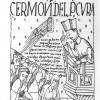
The christian conscience and colonization within the context of the missionary organization in the ‘new world’ “the case of the spanish Latin America”
Monasticism in Buddhism and in the Catholic Church
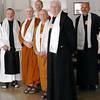
Common elements of Monasticism in Myanmar Buddhism and in the Latin Catholic Church, in preparation for an Interreligious Dialogue : a Comparative Study
New Testament Events
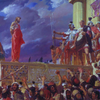
This course is part of the book of Bieke Mahieu, Between Rome and Jerusalem. Herod the Great and His Sons in Their Struggle for Recognition: A Chronological Investigation of the Period 40 BC-39 AD, with a Time Setting of New Testament Events. Orientalia Lovaniensia Analecta 208. Leuven: Peeters, 2012.
New Testament Greek 1
This course will provide a general introduction to the language of the New Testament.
New Testament Greek 2
Prerequisite: completion of NT Greek 1 with a minimum grade of 12/20 or previous study of New Testament Greek.
Newman's Theory of Doctrinal Development

Application of the Newmanian Criteriology on the Axiom "Extra Ecclesiam Nulla Salus"
Online workshop - Narrating to Interpret the World - 17/06/2027

Online Workshop
Narrating to Interpret the World
Stories do more than recount what happened: they also offer ways of understanding what is happening. What role does narrative play in theology, philosophy, history, law, the arts and literature? And what becomes of our societies when the narratives that structured them are called into question?
Date: Thursday 17 June 2027 — 17:00–20:00 (Paris time)
Who can attend: All Domuni students and their teachers
Where: Online
Languages: French, English, Spanish, Italian and Arabic
Participation: Free, registration required
Present a paper: Submit a short proposal for a 3–5 minute presentation
Online workshop - Narrating to Make Sense - 17-12-2026

Online workshop
Narrating to Make Sense
How do we turn our experiences into narratives? What happens when we recount an event, a life, a trial or a conversion? Can storytelling help us understand what we have lived through?
Date: Thursday 17 December 2026 — 17:00–20:00 (Paris time)
Who can attend: All Domuni students and their teachers
Where: Online
Languages: French, English, Spanish, Italian and Arabic
Participation: Free, registration required
Present a paper: Submit a short proposal for a 3–5 minute presentation
Course coordinators: Various teachers
Online workshop - Narrating to Pass On - 18/03/2027

Online workshop
Narrating to Pass On
Why do some stories endure across generations? From biblical narratives to myths, from family traditions to founding stories, how does a culture transmit memory and a particular understanding of humanity?
Date: Thursday 18 March 2027 — 17:00–20:00 (Paris time)
Who can attend: All Domuni students and their teachers
Where: Online
Languages: French, English, Spanish, Italian and Arabic
Participation: Free, registration required
Present a paper: Submit a short proposal for a 3–5 minute presentation
Course coordinators: Various teachers
Opposition to ecumenism

This course will give students a general exposure to traditional opposition to Ecumenism within the perspective of the three main traditions of Christianity.
Organisational Information Systems

Completing this course will be valuable for your future career in a sense that you will be able to build your unique way of analyzing your Business environment. By applying the concepts that we will discover together, you will be able to focus on the interests of your company while building a systemic approach to your environment.
Patristics : An Introduction to the Fathers of the Church
An introduction to the Fathers of the Church, from Ignatius of Antioch to John of Damascus: Writers, doctors, pastors, the Fathers of the Church
Philosophical Anthropology [2484]
How should we understand the relationship between body and soul? This course approaches the question through philosophical anthropology, the philosophical study of the human being. It first presents three contemporary treatments of the issue, before turning to the metaphysics of human nature in Aristotle and St. Thomas Aquinas.
Philosophy and Education

This course has been written to assist the audience to understand the philosophical underpinnings and its relevance to the complex situations of the 21st century, but also to allow learners to determine and appreciate the role of philosophy in education.
Philosophy of Entrepreneurship

The purpose of this course is to explore the philosophies underpinning economic approaches to the study of entrepreneurship.
Philosophy of Language [2491]
Language plays a central role in philosophy, particularly in the analytic tradition. This course explores the main questions of the philosophy of language through foundational texts from this tradition and its critics. It examines central issues such as meaning, reference, and truth, through authors including Bertrand Russell and A. J. Ayer.