



Individual courses
Based on the firm belief that academic excellence should not be limited to those studying for a degree, the university takes pride in offering further education programmes (leading to Certificates of Advanced Study) and individual courses to anyone wishing to pursue their studies with a flexible and personalised approach.
Certificates of Advanced Study and individual courses are all offered with tutoring and assessment. They are graded in the same way as Bachelor and Master level courses. Domuni offers over 1000 individual courses as well as several Certificates of Advanced Study in Theological Studies, Philosophical Studies, Human Rights, Canon Law, or Business.
Students will:
- study at their own pace, from anywhere in the world;
- have access to the learning platform MyDomuni, where they will become part of an international academic community of learners;
- be supervised by a dedicated academic tutor who will accompany them at every step of the way.
Choose your course by using the search engine and clicking on the course title to learn more about each offer.
Courses search
E-seminar: Our Doors Are Open. Welcoming People with Disabilities at Places of Worship

SEM66 - Seminar in Theology
4th October - 29th November 2021
presented by David H. Pereyra
E-Seminar: Read and think with Minima Moralia by Theodor Adorno (SEM128)

This e-seminar in Philosophy will take place from 6th October to 30th November 2025.
E-Seminar: Reading and Understanding the Additions to Daniel

E-seminar in Theology
by John J. Lynch
From 02 october to 27 november 2023
E-seminar: The Dignity of the Human Person

E-seminar in Philosophy and Social Sciences
by Jaco Kruger
From 11th April to 6th June 2022
E-seminar: The Gospel Across Cultures: Greek, Latin, and Syriac Patristic Perspectives (SEM 124)

E-seminar in Theology
Srecko Koralija
From 14 April to 8 June 2025
E-Seminar: The miracle narratives in both the Old and New Testaments

E-Seminar in Theology
From October 6 to November 30, 2025
E-Seminar: The Role and Relevance of Religion in the Contemporary World

E-seminar in Religion
by Isaac Mutelo
From 15 April to 10 June 2024
E-Seminar: Upholding Human Rights and Justice Today: Religion, Media, and NGOs

SEM48 - Human Rights, Philosophy and Religious Studies
4th October - 29th November 2021
presented by Isaac Mutelo
Early Christian Art
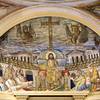
This course critically reviews early Christian and Byzantine art from the 2nd to 6th Century.
Early Christian-Muslim Relations (ENREL07)
A study of the history of Arab Christianity, the Advent of Islam in the East, the cultural contributions of Arabic-speaking Christians, early Christian-Muslim theological conversations, and the beginnings of Christian theology in the world of Islam.
Eastern Church history and cultural landmarks

This course will look at some issues of theological controversy between East and West.
Ecclesiology

This course explores the mystery of the Church as seen in the light of Vatican II.
Ecumenical Biblical Hermeneutics

The aim of this first set of readings is to gain familiarity and/or to review the literary history of the Bible: namely, religious, socio-political, cultural factors which shaped the structure and content of both testaments.
Ecumenical Hagiology

In the lives of the sains lifes " lives" the Christian vision of God, man, and the world which stand all out very clearly. Men can learn almost as much about the real meaning of Christianity from the legends of the saints produced within the tradition of the Church as from the authentic lives themselves. Through the reading and studying the lifes of the saints who arrived before us in the promised land, we came to know how God works in the daily lives of Christians and how faith can be lived not only in good times but especially during persecution and suffering. This helps us to appreciate more our faith and make us grow in loving our brothers as part of God's providence.
Ecumenical Theology

As reasoned discourse about God ecumenical theology is focussing on God’s will for unity among Christians.
English for Economics (SHS-ETC09)

This course aims at expanding students’ vocabulary and improving their understanding of the body of knowledge in Economics.
English, language and culture (EDOMU1111 (SHS-LANG01))

This course is aimed at students who have a level B1 (CEFR) or higher in English.
Environmental Protection in Armed Conflicts [2622]

Armed conflict has major consequences for the environment. This course examines the legal rules designed to protect it in this context, starting with the key concepts and the principal legal instruments. It then explores the different forms of responsibility, particularly that of States, and shows how this issue lies at the heart of current international concerns.
Epistemology [2480]
What is knowledge, and how has philosophy tried to define it? This course offers an introduction to some of the key themes of epistemology, the theory of knowledge. It examines the concept of knowledge and traces the historical development of the discipline.
Ethics of Artificial Intelligence and Robotics [2490]
Artificial intelligence (AI) and robotics raise a wide range of ethical questions. This course introduces their foundations and the philosophical questions they pose about intelligence and consciousness. It then applies major ethical theories to these technologies and examines contemporary debates, such as privacy, surveillance, and algorithmic bias.
Ethics: from Ancient to Modern [2277]
From Plato to contemporary utilitarianism, the history of ethics reveals a wide diversity of possible foundations for morality. This course explores the main moral traditions, from Aristotle's ethics of virtue and Kant's ethics of duty to the utilitarian theories of Bentham and Mill. It offers a comparative understanding of virtue ethics, deontology, and consequentialism.
Financial Management

To understand the basic notion on financial management specially on the key principles of finance, the important role that financial markets have on the economy.
Food Governance and Development Goals

The course introduce the students to the complex architecture of the global food governance, its historical evolution and the inherent challenges.
Foundations of Ethics [2527]
The ethical thought of Plato and Aristotle laid the classical foundations of Western moral philosophy. This course introduces these foundations through a close reading of their major works, including the Republic and the Nicomachean Ethics. It explores key notions such as justice, virtue, happiness, and practical wisdom.
Foundations of Moral Theology

The aim of this course is to discuss the precepts, principles, and values of Catholic morality.
Four aspects of being Jewish (ENREL06)

Understanding the reality of being Jewish requires recognizing the main aspects of the notion of “Jew.” Is it a faith, a civilization, a heritage, a nation, or all of these at once? We face a polysemy that defies simple conceptualization.
Fundamental Moral Theology

Distinctions need to be made regarding the subject of moral theology : first – as distinct from moral philosophy or ethics; second – as distinct from other theologica l studies.
Gerald O'Collins' Understanding of Symbols, Experience and Divine Revelation
An Accommodation for a Christian Approach to the World Religions and Interreligious Dialogue in the Line of Jacques Dupuis
Historical Books of the Old Testament

In this course we look at the Hebrews’ arrival in the Promised Land and continue right up to the end of their existence as an independent nation when disaster overwhelmed them.
History and Theology of Dialogue: Christian-Muslim Dialogue [2705]

Relations between Christianity and Islam, marked by encounters, controversies, and conflicts, raise essential theological questions. This course approaches interreligious dialogue from a theological perspective and traces the history of Christian-Muslim relations. It also examines the turning point of the Second Vatican Council, particularly through the declaration Nostra aetate.
History of the Ecumenical Movement

Like all movements, ecumenism had its beginnings and thus it has a history to be studied.
Human Dignity [2614]

Rooted in philosophical and theological thought, human dignity gradually became a legal principle after the Second World War. This course examines its place within the framework of the European Convention on Human Rights. Although the expression does not appear in the text of the Convention, the course explores the grounds on which dignity may be regarded as a general principle of law.
Human Rights 1. Individual and group rights

Often legislation is based on the consensus of the majority feeling of a group of people rather than on solid philosophical and theological arguments. This frequently leads to superficial legislation with short term benefits for a group of people, but long-term misery for all. The author of this book provides us with a foundation upon which healthy legislation can be built.
Human Rights in Africa [2615]

Africa has its own regional system for the protection of human rights, built on instruments such as the African Charter on Human and Peoples’ Rights. This course introduces this system and the concept of rights on which it rests. It also examines concrete cases of violations in several countries, as well as the role of the media and of human rights and religious organisations.
Human Rights Part II: The catholic social teaching

Human dignity based on the concepts of the image of God and Christ’s redemption becomes the basis for human rights debate from a Christian theological perspective. It is in the community of the human family that a human person realizes his/her being the imago Dei.
Human Rights [2616]

Reconciling individual and collective rights is at the heart of this course, which approaches human rights through a Christian understanding of the human person. It first examines the nature and foundations of rights, before turning to collective rights, such as those of minorities and future generations. It then develops a theological approach to the human person, applied to Catholic social teaching.
Human Rights [2616]
This course examines human rights from a holistic perspective, seeking to reconcile individual and collective rights through a Christian understanding of the human person.
Humanitarian Action: Philosophy, Ethics and International Protection [2626]

From its origins to its current forms, humanitarian action raises ethical, legal, economic and religious questions. This course offers a multidisciplinary approach that sheds light on its values, practices and ambiguities. It explores in particular the neutrality of non-governmental organisations, as well as environmental and migration-related issues.
Imagining Ecological Civilization (SEM137)

Explore the concept of civilization and ecological civilization, its philosophical foundations, ethical implications, and the risks of civilizational collapse.
Indian Philosophy Unit I

The main objective of this unit is to get an above all understanding of what Indian Philosophy is and in what circumstances it has developed. Though Indian Philosophy has developed in different parts of India it has many common characteristics hence the student is likely to know a few important ones. Furthermore, one should have a basic understanding of what Indian philosophy is accused of.