



Individual courses
Based on the firm belief that academic excellence should not be limited to those studying for a degree, the university takes pride in offering further education programmes (leading to Certificates of Advanced Study) and individual courses to anyone wishing to pursue their studies with a flexible and personalised approach.
Certificates of Advanced Study and individual courses are all offered with tutoring and assessment. They are graded in the same way as Bachelor and Master level courses. Domuni offers over 1000 individual courses as well as several Certificates of Advanced Study in Theological Studies, Philosophical Studies, Human Rights, Canon Law, or Business.
Students will:
- study at their own pace, from anywhere in the world;
- have access to the learning platform MyDomuni, where they will become part of an international academic community of learners;
- be supervised by a dedicated academic tutor who will accompany them at every step of the way.
Choose your course by using the search engine and clicking on the course title to learn more about each offer.
Courses search
Indian Philosophy Unit II
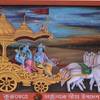
What is expected from the students in this Unit is that they must be able to point out the importance of Vedas in Indian Philosophy, the classification of Vedic literature and must have a proper understanding of the Samhitās, Brāhmaṇas and Āraṇyakas. However, the Upaniśads will be dealt separately. Further, one must be acquainted with a few other important teachings of Veda such as Vedic religion, how monism developed from polytheism, and a basic understanding of what ṛta, the law of karma, the theory of creation, the institution of yajña, āśramas and varṇa is.
Indian Philosophy Unit III
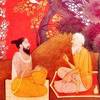
By Studying this particular unit one must be able to understand what is the meaning of Upaniṣad, how it was developed from Vedas and what are its main teachings and how they reach their logical culmination in the identity of the self and the Brahman. One must also be able to understand the Upaniṣadic view point of bondage and liberation along with the cosmogony and puruṣārtas.
The main objective of the conclusion is to introduce the students to the different systems of Indian Philosophy as it deals with various philosophical thoughts of several traditions originated in Indian Subcontinent.
Indian Philosophy [2504]
Classical Indian philosophy developed from Vedic ritual practice into metaphysical reflection on the self, the cosmos, and liberation. This course introduces its principal texts and concepts, from the teachings of the Vedas to the Upaniṣads. It examines key notions such as karma, the unity of Brahman and Ātman, and liberation (mokṣa).
International Criminal Law [2621]

International criminal justice has developed from the Nuremberg and Tokyo Tribunals to the establishment of the International Criminal Court. This course introduces the foundations and principles of international criminal law and traces this historical development. It also examines the core international crimes, such as genocide and crimes against humanity, and the principles of individual criminal responsibility.
International Human Rights Law [2612]

International human rights law faces a range of challenges and emerging issues that concern practitioners and academics alike. This course introduces these issues and offers a critical perspective on the nature and development of this field of law. It draws on case studies, including case law and the jurisprudence of treaty bodies.
International Humanitarian Law [2620]

Wars have been waged since time immemorial, and international humanitarian law (IHL) is the body of law that regulates armed conflict. This course introduces its nature, purpose and historical development, as well as its scope of application. It examines the rules protecting those affected by armed conflict, drawing on concrete case studies.
International Marketing (SHS-MRKE03)

This course will cover some fundamentals questions: Why companies should go international? Is it a benefit for them? Whatis an international product strategy? How can a company adapt its product to the new market? Should we create a new product or maintain a similar product?
International Public Law [2611]

In an increasingly globalised world, public international law governs a large part of relations between States. This course introduces its historical development, foundations and main sources, such as treaties and customary law. It also examines its subjects, particularly States, as well as contemporary areas such as international criminal law and international humanitarian law.
International Refugee Law and Legal Frameworks for Asylum [2618]

Armed conflict, persecution and environmental crises lead to the forced displacement of populations. This course examines international refugee law and the legal frameworks governing asylum, established in particular by the 1951 Geneva Convention and its 1967 Protocol. It also addresses regional frameworks and contemporary issues, such as climate refugees and internally displaced persons.
Introduction to Catholic Tradition

This course gives a survey on the Catholic tradition by examining a series of documents like Lumen Gentium and other documents of Vatican II.
Introduction to Christianity (ENREL03)
This introductory course studies the foundational doctrines of the Christian. It offers an overview of the interrelated doctrines about God, creation, the Bible as the central text of Christianity, human beings and sin, the person and work of Jesus Christ, the Church as Christ’s Body, and the Christian doctrine of the last things. While there is a stress on the evangelical Christian perspective in this course, there will also be key interactions with the Roman Catholic and mainline Protestant Christian traditions.
Introduction to Critical Thinking [2492]
Studying epistemology, or the philosophy of knowledge, offers a way into critical thinking. This course examines the nature, validity, and limits of human knowledge, through concepts such as truth, certainty, and evidence. It also presents and evaluates the principal epistemological doctrines, from skepticism and relativism to rationalism and empiricism.
Introduction to critical thinking. Part I

Etymologically, the word "Epistemology", from the Greek, means the science of knowledge. It is an investigation of knowledge and its problems. A synonymous term is Criteriology which again from the Greek means to distinguish or judge. It deals with testin g knowledge to find truth or detect error.
Introduction to critical thinking. Part II
The modern epistemological problem has two aspects:
1. The opposition between science and philosophy or truth and error. We find this basically in Descartes and Kant.
2. The conflict between science and science or that of contemporary and classic physics and not an opposition between science and philosophy or truth and error.
Introduction to Fundamental Theology

We derive our inspiration from at least two distinct traditions: the Jewish and the Christian. It is important that we should be aware of this! A whole set of questions are implied here. What is the relationship between God and the Jewish traditi on, God and Jesus, God and the church?
Introduction to Islam (ENREL05)

This course is divided into 8 chapters, each covering different aspects of Islam.
Introduction to Islamic Law [2655]

Islamic jurisprudence, or fiqh, has shaped Muslim societies through its ethical and spiritual principles as well as its legal rules. This course introduces its foundations, sources, and historical development, up to the emergence of the major legal schools of Sunni Islam. It also considers contemporary issues in the interpretation of Islamic law.
Introduction to Marketing

This course provides some insight about principles of Marketing.
Introduction to Moral theories in Bioethics I

This course will introduce the students to the historical beginning of bioethics, as well as some of the moral theories employed in bioethics discourse.
Introduction to Moral theories in Bioethics II

This course is the second part to Introduction to Moral theories in Bioethics I.
The course will introduce the students to the historical beginning of bioethics, as well as some of the moral theories employed in bioethics discourse.
Introduction to Philosophy of Law [2507]

Law raises fundamental philosophical questions about its nature, purpose, and justification. This course introduces the major traditions of legal philosophy, such as natural law and legal positivism, and examines their relationship to morality and politics. It also addresses African customary law and Sharia, and their interaction with modern legal systems.
Introduction to Philosophy [2254]

What is philosophy, and how does it differ from other ways of asking questions? This course introduces philosophy as a critical and rational inquiry into fundamental questions about existence, knowledge, and values. It traces the discipline's origins in ancient Greece, especially through Socrates, Plato, and Aristotle, and offers an overview of its main branches.
Introduction to Plato and Aristotle [2483]
Plato and Aristotle laid the foundations of Western philosophy through two complementary approaches. This course first explores Plato's thought, from the search for truth to the Theory of Forms. It then turns to Aristotle, whose philosophy draws on the observation of the natural world and develops key concepts in logic and metaphysics.
Introduction to Sacred Scriptures

The course aims at furnishing the student withe the appropriate tools for a meaningful of the Biblical text, with particular reference to its spiritual, liturgical and pastoral context. The course will further aim at providing a basis familiarity with, and a critical assessment of contemporary exegetical methods.
Introduction to Saint Paul
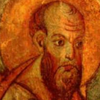
An introduction to the Life, Epistles and Theology of Saint Paul.
Introduction to the Gospel of Mark
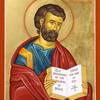
The Gospel of Mark is distinctive within the New testament. It may be the oldest Gospel, but it post-dates some of Paul’s letters, from which we already have a good picture of the preaching of Peter and Paul. Mark paints Jesus in down to earth human form, willing to change his mind, vulnerable to the opinions of others, and especially those of the ones who opposed him.
Introduction to the Pentateuch

All the Bibles, either Hebrew or Catholic or Protestant or Orthodox, agree on the first part of the Biblical Canon, that is the Pentateuch.
Introduction to the Protestant Tradition
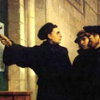
This course helps us to get in touch and explore with the this 16th century religious movement the originated in western Europe over against the prevailing Roman Catholicism.
Introduction to the Synoptic Gospels - Part I

How are the Gospels of Mark, Matthew and Luke interrelated? Did Matthew and Luke both use a written source 'Q' and Mark, when composing their Gospels? Did they each have their own sources as well?
Introduction to the Synoptic Gospels - Part II
This course introduces you to the debates about the meaning of the Gospels of Matthew, Mark and Luke/Acts. What were the theological interests of the authors of the Synoptic Gospels?
Introduction to the Synoptic Gospels - Part III
What is the Jesus presented in the Gospels of Matthew, Mark and Luke like? How did he understand himself? How did the Evangelists understand him? Is that the same or different to the understanding of the disciples?
Introduction to Theology

This course will provide a general introduction to Theology.
Islam: Practices and Beliefs [2649]

Sunni Islam rests on articles of faith and religious practices that form its framework. This course introduces these foundations, including the Five Pillars of Islam, and the main differences between Sunnism and Shiism. It also presents the doctrinal debates surrounding the sources of Islam, particularly the Sunna and the Sīra.
Islamic Theology [2659]

Revelation, the oneness of God, and human freedom are among the major questions of Islamic theology, or kalām. This course traces its emergence and presents its principal schools between the eighth and fourteenth centuries, such as Muʿtazilism and the Ashʿarite school. It thus shows the richness of an intellectual tradition shaped by many debates.
Issues In Epistemology and Philosophy of Science [2509]
At the heart of this course lies the debate between the foundationalism of René Descartes and the fallibilism of Karl Popper. It examines epistemic justification and the nature of scientific knowledge, and presents Kant's theory of synthetic a priori judgments as a possible reconciliation between the two. It also considers the significance of these debates for science education.
Issues in Genomic Research

A Systematic Review and Hermeneutic Exploration of the Management of Incidental Findings in Genomic Research
Jacques Dupuis' Theology of Religions
In order to have a better understanding of Dupuis’ viewpoints, the study will put side-by-side Dupuis’ ideas and those of pluralism, exclusivism and inclusivism. For this reason, the three approaches to the theology of religions will be briefly discussed. Likewise, the study also briefly presents the understanding of the Congregation for the Doctrine of the Faith (CDF) concerning the issues raised.
Jesus Christ and the World Religions
The Unique and Universal Mediation of Jesus Christ in Relation to the Theology of Religions
Jewish Heroines of the Deuterocanonical Books of the Old Testament: A Study of Judith, Sarah and Esther

Students will be introduced to the methods known as Rhetorical Biblical Criticism and Theological Criticism of the Bible.
John Locke's Epistemology and Political Philosophy [2497]
John Locke's political thought and theory of knowledge have profoundly shaped modern philosophy. This course studies both through his major works, Two Treatises of Government and An Essay Concerning Human Understanding. It examines key notions such as natural rights, the social contract, and religious toleration, as well as his emphasis on experience as the source of knowledge.