



Individual courses
Based on the firm belief that academic excellence should not be limited to those studying for a degree, the university takes pride in offering further education programmes (leading to Certificates of Advanced Study) and individual courses to anyone wishing to pursue their studies with a flexible and personalised approach.
Certificates of Advanced Study and individual courses are all offered with tutoring and assessment. They are graded in the same way as Bachelor and Master level courses. Domuni offers over 1000 individual courses as well as several Certificates of Advanced Study in Theological Studies, Philosophical Studies, Human Rights, Canon Law, or Business.
Students will:
- study at their own pace, from anywhere in the world;
- have access to the learning platform MyDomuni, where they will become part of an international academic community of learners;
- be supervised by a dedicated academic tutor who will accompany them at every step of the way.
Choose your course by using the search engine and clicking on the course title to learn more about each offer.
Courses search
Kant: A philosophy of Freedom
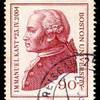
According to Gibelin in his Foreword to Religion within the Limits of Reason Alone, Freedom is the central theme of Kant’s philosophy. This course will introduce to Kant, centering on Freedom as a key concept to understand his philosophy, in the three spheres defined by the critical project: Metaphysics, Moral and Aesthetics.
Kant’s Critique of Pure Reason [2500]
Immanuel Kant's Critique of Pure Reason had a revolutionary impact on the history of philosophy. This course traces the origins of his critical philosophy and introduces its key concepts, with particular attention to his “Copernican Revolution” in the theory of knowledge. It also situates his thought in its intellectual context, including the influence of Leibniz, Wolff, and Hume.
Latin - Part I
Declensions, conjugations, ablative, gerundive... an introduction to the Latin language, mother of Romance languages.
Latin American Philosophy 20th Century [2501]
Throughout the twentieth century, Latin American thinkers explored the question of their continent's identity at the crossroads of philosophy, literature, and cultural criticism. This course studies these currents through key texts from Brazil, Argentina, Mexico, and Cuba. It introduces concepts such as cultural cannibalism and the baroque imagination, through authors including Jorge Luis Borges and Octavio Paz.
Liturgy
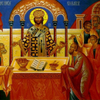
Liturgy is primary theology.
Liturgy Part One
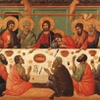
The course provides the theological and historical foundations for understanding the evolution of Christian liturgical forms, and pastoral practice. The course will examine the major moments in the historical development of the liturgy in both East and West from the New Testament era with its Jewish foundations to the present.
Liturgy Part Two
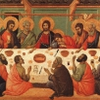
The course will examine the major moments in the historical development of the liturgy in both East and West from the New Testament era with its Jewish foundations to the present. Attention will be given to the role of ritual and symbol in human life, the relationship of liturgy to society and culture, and critical approaches to liturgical practice.
Management and Organizations

Organizations are conceived as systems and as such are embedded in an environment.
Marketing Management

The Marketing Management course will take participants through market analysis, marketing strategy development, marketing plans delivery and the need for marketing metrics.
Marketing Research

This self-paced course consists of three modules of study. This course will provide students with links, images, and videos.
Martin Heidegger, the Notion of Being: A Reconstruction and Reversal [2508]
The meaning of Being is the central question of Martin Heidegger's philosophy. This course traces the history of this question from the Pre-Socratics to Heidegger, and introduces key concepts such as Dasein, being-in-the-world, and temporality. It also examines his dialogue with major philosophical traditions and the critiques his thought has inspired.
Mediation in Conflicts [2625]

Based on dialogue and the responsibility of the parties, mediation is a process for resolving conflicts. This course presents its core principles and the role of the mediator. It also explores international and intercultural mediation, its relationship with judicial proceedings, and the “U Mediation” process.
Medieval Arabic Philosophy and Aristotle: Logic, Ethics, and Politics [2658]

This course examines the reception of Aristotle’s philosophy in the medieval Arab-Islamic world through its logical, ethical, and political dimensions.
Message to Movement : a preaching intensive (SEM149)
E-seminar in Theology
Metaphysics - Part 1
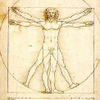
Metaphysics is the study of things in their ultimate causes. As such, the specialty of metaphysics is that it seeks the final explanation or the ultimate causes of things precisely in so far as they are, in so far as they exist, or in so far as they are real. Aristotle called it “First Philosophy” or “Theology” since it leads to the first principle or the ultimate explanation of all things.
Metaphysics - Part 2
All human knowledge begins with sense experience but can terminate sometimes in the senses, or in the imagination or in the intellect alone . Accordingly we can distinguish between three levels of scientific knowledge corresponding to the three degrees of abstraction from matter which can be made by the intellect in its examination of reality.
Metaphysics or Philosophy of Being [2486]
What does it mean for something to be, and what are the ultimate principles of reality? This course introduces metaphysics, or the philosophy of being, through its key concepts, such as substance, essence, existence, and causality. It concludes with an introduction to Indian metaphysics.