



Individual courses
Based on the firm belief that academic excellence should not be limited to those studying for a degree, the university takes pride in offering further education programmes (leading to Certificates of Advanced Study) and individual courses to anyone wishing to pursue their studies with a flexible and personalised approach.
Certificates of Advanced Study and individual courses are all offered with tutoring and assessment. They are graded in the same way as Bachelor and Master level courses. Domuni offers over 1000 individual courses as well as several Certificates of Advanced Study in Theological Studies, Philosophical Studies, Human Rights, Canon Law, or Business.
Students will:
- study at their own pace, from anywhere in the world;
- have access to the learning platform MyDomuni, where they will become part of an international academic community of learners;
- be supervised by a dedicated academic tutor who will accompany them at every step of the way.
Choose your course by using the search engine and clicking on the course title to learn more about each offer.
Courses search
Imagining Ecological Civilization (SEM137)

Explore the concept of civilization and ecological civilization, its philosophical foundations, ethical implications, and the risks of civilizational collapse.
Indian Philosophy Unit I
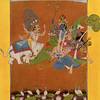
The main objective of this unit is to get an above all understanding of what Indian Philosophy is and in what circumstances it has developed. Though Indian Philosophy has developed in different parts of India it has many common characteristics hence the student is likely to know a few important ones. Furthermore, one should have a basic understanding of what Indian philosophy is accused of.
Indian Philosophy Unit II
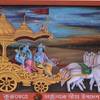
What is expected from the students in this Unit is that they must be able to point out the importance of Vedas in Indian Philosophy, the classification of Vedic literature and must have a proper understanding of the Samhitās, Brāhmaṇas and Āraṇyakas. However, the Upaniśads will be dealt separately. Further, one must be acquainted with a few other important teachings of Veda such as Vedic religion, how monism developed from polytheism, and a basic understanding of what ṛta, the law of karma, the theory of creation, the institution of yajña, āśramas and varṇa is.
Indian Philosophy Unit III
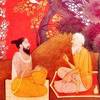
By Studying this particular unit one must be able to understand what is the meaning of Upaniṣad, how it was developed from Vedas and what are its main teachings and how they reach their logical culmination in the identity of the self and the Brahman. One must also be able to understand the Upaniṣadic view point of bondage and liberation along with the cosmogony and puruṣārtas.
The main objective of the conclusion is to introduce the students to the different systems of Indian Philosophy as it deals with various philosophical thoughts of several traditions originated in Indian Subcontinent.
Introduction to critical thinking. Part I

Etymologically, the word "Epistemology", from the Greek, means the science of knowledge. It is an investigation of knowledge and its problems. A synonymous term is Criteriology which again from the Greek means to distinguish or judge. It deals with testin g knowledge to find truth or detect error.
Introduction to critical thinking. Part II
The modern epistemological problem has two aspects:
1. The opposition between science and philosophy or truth and error. We find this basically in Descartes and Kant.
2. The conflict between science and science or that of contemporary and classic physics and not an opposition between science and philosophy or truth and error.
Introduction to Fundamental Theology

We derive our inspiration from at least two distinct traditions: the Jewish and the Christian. It is important that we should be aware of this! A whole set of questions are implied here. What is the relationship between God and the Jewish traditi on, God and Jesus, God and the church?
Introduction to Moral theories in Bioethics I

This course will introduce the students to the historical beginning of bioethics, as well as some of the moral theories employed in bioethics discourse.
Introduction to Moral theories in Bioethics II

This course is the second part to Introduction to Moral theories in Bioethics I.
The course will introduce the students to the historical beginning of bioethics, as well as some of the moral theories employed in bioethics discourse.
Introduction to Philosophy of Law [2507]

Law raises fundamental philosophical questions about its nature, purpose, and justification. This course introduces the major traditions of legal philosophy, such as natural law and legal positivism, and examines their relationship to morality and politics. It also addresses African customary law and Sharia, and their interaction with modern legal systems.
Introduction to Philosophy [2254]

What is philosophy, and how does it differ from other ways of asking questions? This course introduces philosophy as a critical and rational inquiry into fundamental questions about existence, knowledge, and values. It traces the discipline's origins in ancient Greece, especially through Socrates, Plato, and Aristotle, and offers an overview of its main branches.
Introduction to Plato and Aristotle [2483]
Plato and Aristotle laid the foundations of Western philosophy through two complementary approaches. This course first explores Plato's thought, from the search for truth to the Theory of Forms. It then turns to Aristotle, whose philosophy draws on the observation of the natural world and develops key concepts in logic and metaphysics.
Introduction to Sacred Scriptures

The course aims at furnishing the student withe the appropriate tools for a meaningful of the Biblical text, with particular reference to its spiritual, liturgical and pastoral context. The course will further aim at providing a basis familiarity with, and a critical assessment of contemporary exegetical methods.
Introduction to the Synoptic Gospels - Part II

This course introduces you to the debates about the meaning of the Gospels of Matthew, Mark and Luke/Acts. What were the theological interests of the authors of the Synoptic Gospels?
Introduction to the Synoptic Gospels - Part III
What is the Jesus presented in the Gospels of Matthew, Mark and Luke like? How did he understand himself? How did the Evangelists understand him? Is that the same or different to the understanding of the disciples?
Introduction to Theology

This course will provide a general introduction to Theology.
Issues In Epistemology and Philosophy of Science [2509]
At the heart of this course lies the debate between the foundationalism of René Descartes and the fallibilism of Karl Popper. It examines epistemic justification and the nature of scientific knowledge, and presents Kant's theory of synthetic a priori judgments as a possible reconciliation between the two. It also considers the significance of these debates for science education.
Issues in Genomic Research

A Systematic Review and Hermeneutic Exploration of the Management of Incidental Findings in Genomic Research
John Locke's Epistemology and Political Philosophy [2497]
John Locke's political thought and theory of knowledge have profoundly shaped modern philosophy. This course studies both through his major works, Two Treatises of Government and An Essay Concerning Human Understanding. It examines key notions such as natural rights, the social contract, and religious toleration, as well as his emphasis on experience as the source of knowledge.
Kant: A philosophy of Freedom
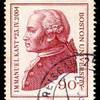
According to Gibelin in his Foreword to Religion within the Limits of Reason Alone, Freedom is the central theme of Kant’s philosophy. This course will introduce to Kant, centering on Freedom as a key concept to understand his philosophy, in the three spheres defined by the critical project: Metaphysics, Moral and Aesthetics.