



Individual courses
Based on the firm belief that academic excellence should not be limited to those studying for a degree, the university takes pride in offering further education programmes (leading to Certificates of Advanced Study) and individual courses to anyone wishing to pursue their studies with a flexible and personalised approach.
Certificates of Advanced Study and individual courses are all offered with tutoring and assessment. They are graded in the same way as Bachelor and Master level courses. Domuni offers over 1000 individual courses as well as several Certificates of Advanced Study in Theological Studies, Philosophical Studies, Human Rights, Canon Law, or Business.
Students will:
- study at their own pace, from anywhere in the world;
- have access to the learning platform MyDomuni, where they will become part of an international academic community of learners;
- be supervised by a dedicated academic tutor who will accompany them at every step of the way.
Choose your course by using the search engine and clicking on the course title to learn more about each offer.
Courses search
A Brief History of Medieval Philosophy I

Can we be both Christians and genuine philosophers? Are faith and philosophy mutually exclusive, or not?
A Brief History of Medieval Philosophy II
Can we be both Christians and genuine philosophers? Are faith and philosophy mutually exclusive, or not?
An Introduction to the New Testament using the Historical-Critical Method
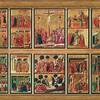
The first thing to say is that the New Testament is the second half of the Christian Bible, and follows the Old Testament and what Protestants call the Apocrypha – mostly intertestamental writings which continue to speak of God’s grace and his care for his people, the people of Israel. The New Testament is about Jesus, a Jew from Israel, who lived and died and was brought back to life again by God.
An Introduction to Thomas Aquinas

This course will enable you to explore his mind and to learn from Thomas Aquinas. The Dominican motto contemplata aliis tradere, which means contemplate and hand over to others is from Thomas, and this motto summarises the aims of the course.
Aquinas' Notion of Friendship [2495]
This course examines Thomas Aquinas’ understanding of friendship and its essential role in the pursuit of true happiness. Drawing on Aristotle, Cicero, Scripture, and St. Augustine, it explores the philosophical and theological foundations of happiness and friendship before presenting Aquinas’ synthesis.
Biblical Hebrew 1

Learn biblical hebrew with this very interactive course, supported by videos, audio documents and biblical texts.
Bonaventure and Creation

We willl examine aspects of Bonaventure’s work pertaining to creation extending from the broad milieu encountered in his thirteenth-century context to specific, key, areas of his speculative thought.
Bonaventure, the theologian

Franciscan insights into a holistic view of the natural world has long been recognized and, indeed, is central to the intuitive vision of Francis of Assisi.
Catholic Social Teaching

Catholic Social Teaching (also known as Catholic Social Doctrine) sums up the teachings of the Church on social justice issues. It promotes a vision of a just society that is grounded in the Sacred Scriptures and in the wisdom gathered from experience by the Christian community as it has responded to social, economic, and political issues throughout history.
Christian-Muslim Dialogue and Secularization

The aim is to explore some aspects of Christian-Muslim dialogue in Britain, against the climate of rising secularization of European societies and the changing dynamics of institutional religious channels in this context. It will also touch upon questions of faith, belonging and belief, after an in-depth analysis of the challenges secularism represents for inter-faith dialogue given the contemporary popularity of militant atheism.
Christology Part One

Teaching, Death, Resurrection... History
Christology Part Two
Paul, John, Fathers of the Church, great Councils
Church History Part I

Christianity is an historical religion; it’s a religion about an historical event: Jesus' life, death and resurrection. But there may be conflicts between the pastoral and the historical points of view.
Church History. Part II
The present course covers the beginning of the modern period, from the 16 th to the 18 th century. This period, especially the 16 th century, is a turning point in the history of Western culture.
Church History. Part III

African Church History.
We will not engage on a history of the missionary movement in Africa but rather on a history of indigenous forms of Christianity – that is to say the forms of life inspired by Christianity that were accepted, adapted and spread by Africans.
Divine Impassibility
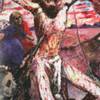
Divine Impassibility: A Thomistic Critique of Jürgen Moltmann’s Staurocentric Trinitarianism
Dominican History
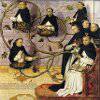
Dominican History : The preaching campaign in the Lauragais 1206-1207
E-Seminar - The Arabic Bible in Shared Spaces

This seminar explores the history of the earliest Arabic translations of the Bible through the study of ancient manuscripts and their historical, cultural, and religious contexts. It examines the role of the Scriptures within Arabic-speaking communities as well as the Islamic theological and cultural influences that shaped these translations. Particular attention will be given to the Greek and Syriac origins of the Arabic biblical texts and to the contemporary issues related to their interpretation.
This seminar will take place from March 1 to April 25, 2027.
E-seminar - The Gospels Across Cultures

The reception of the Gospel across Greek, Latin, and Syriac traditions shows how early Christianity adapted to different cultures and languages without losing its core message. By engaging local philosophies, institutions, and literary forms, these traditions enriched Christian thought. Their legacy continues to inspire dialogue with diverse cultures and religions in today's interconnected world.
From October 5th to November 29th, 2026