




Individual courses
Based on the firm belief that academic excellence should not be limited to those studying for a degree, the university takes pride in offering further education programmes (leading to Certificates of Advanced Study) and individual courses to anyone wishing to pursue their studies with a flexible and personalised approach.
Certificates of Advanced Study and individual courses are validated in the same way as Bachelor and Master level courses. Domuni offers over 500 individual courses and 15 Certificates of Advanced Study in Theological Studies, Philosophical Studies, Human Rights, Canon Law, or Business.
Students will:
- Study at their own pace, for a duration of 12 months;
- Have access to the learning platform MyDomuni, where they will become part of an international academic community;
- Be supervised by a dedicated academic tutor who will accompany them at every step of the way.
Choose your course by using the search engine and clicking on the course title to learn more about each offer.
Courses search
Bioethics III: Clinical Ethics & Legal Implications

Concerned with restoring and strengthening bonds between professionals, patients and families, not simply dealing with principles like bioethics.
Bonaventure and Creation
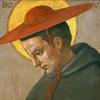
We willl examine aspects of Bonaventure’s work pertaining to creation extending from the broad milieu encountered in his thirteenth-century context to specific, key, areas of his speculative thought.
Bonaventure, the Preacher

WORKS of ST. BONAVENTURE BREVILOQUIUM Introduction, Translation and Notes by Dominic V. Monti, O.F.M. Franciscan Institute Publications The Franciscan Institute Saint Bonaventure University Saint Bonaventure, NY 14
Bonaventure, the theologian
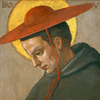
Franciscan insights into a holistic view of the natural world has long been recognized and, indeed, is central to the intuitive vision of Francis of Assisi.
Business Ethics

Completing this course will be valuable for your future career in a sense that you will be able to build your unique way of analyzing your Business environment. By applying the concepts that we will discover together, you will be able to focus on the interests of your company while being ethical.
Canon Law - Part II

Law is a juridical system that organizes the social aspects of humankind. For that reason the systematic oranization, the content and the governing principle of canon law and its different branches should and do conform to how well the Church’s social dimension and social structures are understood at each moment in time.
Canon Law- Part I
Law is a juridical system that organizes the social aspects of humankind. For that reason the systematic oranization, the content and the governing principle of canon law and its different branches should and do conform to how well the Church’s social dimension and social structures are understood at each moment in time.
Catholic Social Teaching
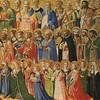
Catholic Social Teaching (also known as Catholic Social Doctrine) sums up the teachings of the Church on social justice issues. It promotes a vision of a just society that is grounded in the Sacred Scriptures and in the wisdom gathered from experience by the Christian community as it has responded to social, economic, and political issues throughout history.
Christian-Muslim Dialogue Across Cultures (ENREL01)

It is an innovative and practice-oriented course that explores the dynamics of interfaith engagement in today’s interconnected world. Drawing on case studies from Africa, Asia, and the MENA region, the course examines how Christians and Muslims build trust, address tensions, and collaborate on shared social challenges. Students will gain a solid grounding in key concepts such as interfaith dialogue, culture, identity, coexistence, and lived religion, while also developing practical skills in mediation, facilitation, and project design. Through real-world examples, reflective assignments, and applied exercises, participants learn how dialogue can transform relationships, dismantle stereotypes, and contribute to peaceful and inclusive societies. Designed for students, practitioners, and peacebuilders, the course bridges theory and practice, preparing participants to engage meaningfully in interfaith work across diverse cultural and religious contexts.
Christian-Muslim Dialogue and Secularization

The aim is to explore some aspects of Christian-Muslim dialogue in Britain, against the climate of rising secularization of European societies and the changing dynamics of institutional religious channels in this context. It will also touch upon questions of faith, belonging and belief, after an in-depth analysis of the challenges secularism represents for inter-faith dialogue given the contemporary popularity of militant atheism.
Christian–Muslim Relations (ENREL02)

Christian–Muslim relations as an academic field. This course introduces key definitions, conceptual frameworks, and scholarly approaches used to study the complex interactions between Christians and Muslims across time and space
Christology Part One

Teaching, Death, Resurrection... History
Christology Part Two
Paul, John, Fathers of the Church, great Councils
Church History Part I
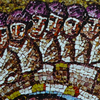
Christianity is an historical religion; it’s a religion about an historical event: Jesus' life, death and resurrection. But there may be conflicts between the pastoral and the historical points of view.
Church History. Part II
The present course covers the beginning of the modern period, from the 16 th to the 18 th century. This period, especially the 16 th century, is a turning point in the history of Western culture.
Church History. Part III
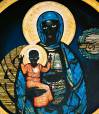
African Church History.
We will not engage on a history of the missionary movement in Africa but rather on a history of indigenous forms of Christianity – that is to say the forms of life inspired by Christianity that were accepted, adapted and spread by Africans.
Constitutional Protection of Fundamental Rights [2619]

This course examines the constitutional protection of fundamental rights from both French and comparative perspectives. After defining human rights and fundamental rights and presenting their main classifications, it analyses how they are enshrined in constitutions and the mechanisms designed to ensure their effective implementation.
Contemporary Islam: Doctrines and Schools of Thought in the Arab World [2650]

This course examines the main schools of thought shaping contemporary Islam in the Arab world, focusing on the discourse of religious and intellectual figures rather than on the practices of believers.
Contemporary Issues in Bioethics I

To show the implications of normative theories for specific moral issues or contemporary debates on particular ethical issues.