




Master 2 Philosophy

Length: 1 year (can be spread over 2 calendar years)
Preparing for degree: Master of Arts in Philosophy
Entry requirements: MA1 in Philosophy (or equivalent)
Choose 4 courses and 1 research seminar from below - to be approved by the Director of Studies
Master 2 involves a thesis of 350 000 characters - (including spaces). Students will then complete an oral thesis defense in front of an academic jury.
List of Courses
Introduction to Plato and Aristotle [2483]
This course introduces the two great founders of Western philosophy through their complementary approaches. The first part explores Plato’s thought, focusing on the search for truth, virtue, the immortality of the soul, and the Theory of Forms, while highlighting the central role of Socrates, dialogue, and dialectical inquiry.
Aristotle and the Aristotelian Tradition
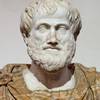
This course introduces some of the key elements in Aristotle's thought.
Foundations of Ethics [2527]
This course introduces the philosophical foundations of ethics through a close reading of the major works of Plato and Aristotle. It begins by defining ethics as a branch of philosophy concerned with the rational search for the good, before examining the origins of ethical thought in ancient Greece.
Bioethics I : Foundations of Modern Bioethics

Legal, Philosophical and Moral dimension
Bioethics II : Informed Consent and Risk Analysis
Investigators have a duty to ensure subjects give not only informed, but voluntary consent?
Bioethics III: Clinical Ethics & Legal Implications
Concerned with restoring and strengthening bonds between professionals, patients and families, not simply dealing with principles like bioethics.
Introduction to critical thinking. Part I

Etymologically, the word "Epistemology", from the Greek, means the science of knowledge. It is an investigation of knowledge and its problems. A synonymous term is Criteriology which again from the Greek means to distinguish or judge. It deals with testin g knowledge to find truth or detect error.
Introduction to critical thinking. Part II
The modern epistemological problem has two aspects:
1. The opposition between science and philosophy or truth and error. We find this basically in Descartes and Kant.
2. The conflict between science and science or that of contemporary and classic physics and not an opposition between science and philosophy or truth and error.
The Origins of Philosophy [2479]
This course offers an introduction to the nature, purpose, and development of philosophy. It explores what philosophy is, why it has remained a central intellectual discipline, and how it relates to other fields of inquiry, particularly theology.
Kant: A philosophy of Freedom

According to Gibelin in his Foreword to Religion within the Limits of Reason Alone, Freedom is the central theme of Kant’s philosophy. This course will introduce to Kant, centering on Freedom as a key concept to understand his philosophy, in the three spheres defined by the critical project: Metaphysics, Moral and Aesthetics.
Philosophical Anthropology [2484]
This course will engage the question of how we are to construe the relationship that obtains between body and soul/mind. Rather than adopting a purely historical approach, beginning with Aristotle, the text begins with an exposition of three different contemporary treatments of this issue before proceeding to expound important aspects of Aristotle’s and St. Thomas Aquinas’s metaphysics of human nature.
Introduction to Moral theories in Bioethics II

This course is the second part to Introduction to Moral theories in Bioethics I.
The course will introduce the students to the historical beginning of bioethics, as well as some of the moral theories employed in bioethics discourse.
Contemporary Issues in Bioethics I

To show the implications of normative theories for specific moral issues or contemporary debates on particular ethical issues.
Contemporary Issues in Bioethics II

To show the implications of normative theories for specific moral issues or contemporary debates on particular ethical issues.
Michel Foucault, analyst of the norm

The norm is the idea central to the thought of Michel Foucault. It is the point from which he studies modern society. He distinguishes the norm from other forms of power.
Being and Knowing [2485]
This course provides a comprehensive introduction to epistemology, the branch of philosophy concerned with the nature, sources, justification, and limits of human knowledge.
Indian Philosophy Unit I
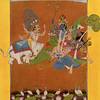
The main objective of this unit is to get an above all understanding of what Indian Philosophy is and in what circumstances it has developed. Though Indian Philosophy has developed in different parts of India it has many common characteristics hence the student is likely to know a few important ones. Furthermore, one should have a basic understanding of what Indian philosophy is accused of.
Indian Philosophy Unit II

What is expected from the students in this Unit is that they must be able to point out the importance of Vedas in Indian Philosophy, the classification of Vedic literature and must have a proper understanding of the Samhitās, Brāhmaṇas and Āraṇyakas. However, the Upaniśads will be dealt separately. Further, one must be acquainted with a few other important teachings of Veda such as Vedic religion, how monism developed from polytheism, and a basic understanding of what ṛta, the law of karma, the theory of creation, the institution of yajña, āśramas and varṇa is.
Indian Philosophy Unit III
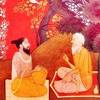
By Studying this particular unit one must be able to understand what is the meaning of Upaniṣad, how it was developed from Vedas and what are its main teachings and how they reach their logical culmination in the identity of the self and the Brahman. One must also be able to understand the Upaniṣadic view point of bondage and liberation along with the cosmogony and puruṣārtas.
The main objective of the conclusion is to introduce the students to the different systems of Indian Philosophy as it deals with various philosophical thoughts of several traditions originated in Indian Subcontinent.
Analytic Philosophy
This course seeks to introduce students to analytic philosophy.
Ethics: from Ancient to Modern [2277]
This course offers a structured and rigorous journey through the history of ethics, from Plato to contemporary utilitarianism, in order to highlight the diversity of possible foundations for morality.
Metaphysics or Philosophy of Being [2486]
This course offers a systematic introduction to Metaphysics, or the Philosophy of Being, the branch of philosophy that studies being as being and investigates the ultimate causes and principles of reality.
E-Seminar: Upholding Human Rights and Justice Today: Religion, Media, and NGOs

SEM48 - Human Rights, Philosophy and Religious Studies
4th October - 29th November 2021
presented by Isaac Mutelo
E-seminar: The Dignity of the Human Person

E-seminar in Philosophy and Social Sciences
by Jaco Kruger
From 11th April to 6th June 2022
E-seminar: Analytical Jurisprudence: Theories and Practical Application

E-seminar in Philosophy and Law
by Isaac Mutelo
From 3rd October to 28th November 2022
Philosophy of Science

The impact of science, not only on the world we inhabit, but also on the world of philosophy, is undeniable.
E-Seminar: Learning to Dwell

E-seminar in Philosophy
by Jaco Kruger
From 17th April to 12th June 2023
E-Seminar : Leadership, Followership, and AI: Rethinking Responsibility and Error (SEM134)

This e-seminar in Philosophy will take place from 6th October to 30th November 2025. Srećko Koralija explores the roles of leadership and followership in a world increasingly influenced by artificial intelligence and algorithmic decision-making.
E-seminar - A Philosophy of Home and Homecoming

Jaco Kruger provides an introduction to philosophical questions regarding the experience of home and the possibility of using this experience as an entryway to an examination of the human condition.
This seminar will take place online from October 5 to November 29, 2026
E-Seminar: Read and think with Minima Moralia by Theodor Adorno (SEM128)

This e-seminar in Philosophy will take place from 6th October to 30th November 2025.
E-Seminar: Artificial Intelligence and Robotics: Ethical Issues (SEM132)

This seminar will take place from 6th October to 30th November 2025. It explores the ethical implications of artificial intelligence (AI) and robotics by engaging with key ethical issues and aspects, including privacy, autonomous systems, job displacement, algorithmic bias, surveillance issues, and the moral status of machines.
E-seminar - Introduction to Process Philosophy

This seminar aims to offer students an immersion in processual metaphysics, exploring its conceptual foundations and interdisciplinary implications. The approach adopted is not limited to theoretical understanding: it also engages in critical reflection on how processual thinking can transform our views of knowledge, ethics and social relations.
This seminar will take place from March 1 to April 25, 2027.
Democracy and its Discontents in the 21st Century (SEM131)

Explore the challenges and future of democracy, including human rights, inequality, authoritarianism, and civic engagement through case studies and critical analysis.
Imagining Ecological Civilization (SEM137)

Explore the concept of civilization and ecological civilization, its philosophical foundations, ethical implications, and the risks of civilizational collapse.
E-séminar - Ethics and Technology: AI, Surveillance, and Digital Responsibility

This seminar examines the ethical challenges raised by contemporary technologies such as artificial intelligence, digital surveillance, and data-driven systems. It explores issues of responsibility, justice, privacy, and human agency through interdisciplinary analysis and concrete case studies. Participants will develop critical tools to engage with current debates on algorithmic bias, digital rights, and the social impact of emerging technologies.
This seminar will take place from March 1 to April 25, 2027.
E-seminar : Bioethics and Human Enhancement: Where Should We Draw the Line?
This seminar examines the ethical, philosophical, and social challenges raised by human enhancement technologies. Through an interdisciplinary approach combining philosophy, medicine, and technology studies, participants will explore debates on genetic engineering, neurotechnology, life extension, human dignity, and the moral limits of bioenhancement.
This Seminar will take place from October 4 to November 28, 2027.