



Individual courses
Based on the firm belief that academic excellence should not be limited to those studying for a degree, the university takes pride in offering further education programmes (leading to Certificates of Advanced Study) and individual courses to anyone wishing to pursue their studies with a flexible and personalised approach.
Certificates of Advanced Study and individual courses are all offered with tutoring and assessment. They are graded in the same way as Bachelor and Master level courses. Domuni offers over 1000 individual courses as well as several Certificates of Advanced Study in Theological Studies, Philosophical Studies, Human Rights, Canon Law, or Business.
Students will:
- study at their own pace, from anywhere in the world;
- have access to the learning platform MyDomuni, where they will become part of an international academic community of learners;
- be supervised by a dedicated academic tutor who will accompany them at every step of the way.
Choose your course by using the search engine and clicking on the course title to learn more about each offer.
Courses search
An Introduction to the New Testament using the Historical-Critical Method
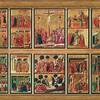
The first thing to say is that the New Testament is the second half of the Christian Bible, and follows the Old Testament and what Protestants call the Apocrypha – mostly intertestamental writings which continue to speak of God’s grace and his care for his people, the people of Israel. The New Testament is about Jesus, a Jew from Israel, who lived and died and was brought back to life again by God.
Biblical Hebrew 1

Learn biblical hebrew with this very interactive course, supported by videos, audio documents and biblical texts.
E-Seminar - The Arabic Bible in Shared Spaces

This seminar explores the history of the earliest Arabic translations of the Bible through the study of ancient manuscripts and their historical, cultural, and religious contexts. It examines the role of the Scriptures within Arabic-speaking communities as well as the Islamic theological and cultural influences that shaped these translations. Particular attention will be given to the Greek and Syriac origins of the Arabic biblical texts and to the contemporary issues related to their interpretation.
This seminar will take place from March 1 to April 25, 2027.
E-seminar - The Gospels Across Cultures

The reception of the Gospel across Greek, Latin, and Syriac traditions shows how early Christianity adapted to different cultures and languages without losing its core message. By engaging local philosophies, institutions, and literary forms, these traditions enriched Christian thought. Their legacy continues to inspire dialogue with diverse cultures and religions in today's interconnected world.
From October 5th to November 29th, 2026
E-seminar : Archaeology and the Bible
SEM 41 - Archaeology and the Bible
From 7th October to 30th November 2019
by Hervé Tremblay
FROM 7TH OCTOBER 2019 TO 30TH NOVEMBER 2019. SEMINAR CLOSED
Historical Books of the Old Testament

In this course we look at the Hebrews’ arrival in the Promised Land and continue right up to the end of their existence as an independent nation when disaster overwhelmed them.
Introduction to Sacred Scriptures
The course aims at furnishing the student withe the appropriate tools for a meaningful of the Biblical text, with particular reference to its spiritual, liturgical and pastoral context. The course will further aim at providing a basis familiarity with, and a critical assessment of contemporary exegetical methods.
Introduction to Saint Paul
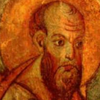
An introduction to the Life, Epistles and Theology of Saint Paul.
Introduction to the Gospel of Mark
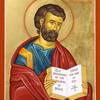
The Gospel of Mark is distinctive within the New testament. It may be the oldest Gospel, but it post-dates some of Paul’s letters, from which we already have a good picture of the preaching of Peter and Paul. Mark paints Jesus in down to earth human form, willing to change his mind, vulnerable to the opinions of others, and especially those of the ones who opposed him.
Introduction to the Pentateuch

All the Bibles, either Hebrew or Catholic or Protestant or Orthodox, agree on the first part of the Biblical Canon, that is the Pentateuch.
Introduction to the Synoptic Gospels - Part I

How are the Gospels of Mark, Matthew and Luke interrelated? Did Matthew and Luke both use a written source 'Q' and Mark, when composing their Gospels? Did they each have their own sources as well?
Introduction to the Synoptic Gospels - Part II
This course introduces you to the debates about the meaning of the Gospels of Matthew, Mark and Luke/Acts. What were the theological interests of the authors of the Synoptic Gospels?
Introduction to the Synoptic Gospels - Part III
What is the Jesus presented in the Gospels of Matthew, Mark and Luke like? How did he understand himself? How did the Evangelists understand him? Is that the same or different to the understanding of the disciples?
Jewish Heroines of the Deuterocanonical Books of the Old Testament: A Study of Judith, Sarah and Esther
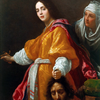
Students will be introduced to the methods known as Rhetorical Biblical Criticism and Theological Criticism of the Bible.
New Testament Events
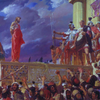
This course is part of the book of Bieke Mahieu, Between Rome and Jerusalem. Herod the Great and His Sons in Their Struggle for Recognition: A Chronological Investigation of the Period 40 BC-39 AD, with a Time Setting of New Testament Events. Orientalia Lovaniensia Analecta 208. Leuven: Peeters, 2012.
New Testament Greek 1
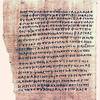
This course will provide a general introduction to the language of the New Testament.
New Testament Greek 2
Prerequisite: completion of NT Greek 1 with a minimum grade of 12/20 or previous study of New Testament Greek.
Prophets Part I
An Introduction to the Prophetical Phenomenon
The prophets understand themselves as inspired by God and claim that what they say is word of God. This is obvious from the very frequent formula they use « Thus speaks the Lord »...
Prophets Part II
Minor Prophets
Study of the Writing Prophets in Chronological Order
Prophets Part III
Isaiah, Jeremiah, Ezekiel
Study of the Writing Prophets in Chronological Order: from the Exile to the New Testament