




Individual courses
Based on the firm belief that academic excellence should not be limited to those studying for a degree, the university takes pride in offering further education programmes (leading to Certificates of Advanced Study) and Individual Courses to anyone wishing to be immersed in the intellectual heritage of the Dominicans.
Certificates of Advanced Study and individual courses are validated in the same way as Bachelor level courses. A paper of 12000-16000 characters, including spaces is required for each course. The study duration for a certificate is 12 months, according to the pace and rhythm of each student, under supervision by a tutor.
Choose between:
- 15 Certificates of Advanced Study, in Theological or Philosophical Studies
- Over 500 Individual Courses
Choose your course by using the search engine and click on the title to see the detailed outline.
- Accompanied courses – you have access to the learning platform and your studies will be supervised by an academic tutor. These courses are worth 3 ECTS credits which can be counted towards a study programme with Domuni or at another academic institution.
- Read only courses: you will receive the PDF of your chosen course within 48 hours
Courses search
Indian Philosophy Unit II
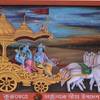
What is expected from the students in this Unit is that they must be able to point out the importance of Vedas in Indian Philosophy, the classification of Vedic literature and must have a proper understanding of the Samhitās, Brāhmaṇas and Āraṇyakas. However, the Upaniśads will be dealt separately. Further, one must be acquainted with a few other important teachings of Veda such as Vedic religion, how monism developed from polytheism, and a basic understanding of what ṛta, the law of karma, the theory of creation, the institution of yajña, āśramas and varṇa is.
Indian Philosophy Unit III
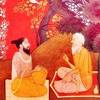
By Studying this particular unit one must be able to understand what is the meaning of Upaniṣad, how it was developed from Vedas and what are its main teachings and how they reach their logical culmination in the identity of the self and the Brahman. One must also be able to understand the Upaniṣadic view point of bondage and liberation along with the cosmogony and puruṣārtas.
The main objective of the conclusion is to introduce the students to the different systems of Indian Philosophy as it deals with various philosophical thoughts of several traditions originated in Indian Subcontinent.
Indian Philosophy [2504]
This course offers an introduction to the foundations of classical Indian philosophy through its principal texts and concepts. It begins by examining the meaning of darśana and śāstra, the historical development of Indian philosophy, its major traditions, and its shared characteristics.
International Criminal Law [2621]
This course provides an introduction to international criminal law, combining its theoretical foundations with the analysis of relevant jurisprudence. It examines the sources and fundamental principles of the discipline and its relationship with international human rights law and international humanitarian law.
International Human Rights Law [2612]
This course is an introduction to international human rights law. Its focus is on the challenges and emerging issues that are of interest to both practitioners and academics in international human rights law.
International Humanitarian Law [2620]
The course seeks to explain the concept, nature and history of International Humanitarian Law (“IHL”) in such a manner that the student will become familiar with its operations in international law.
International Marketing (SHS-MRKE03)

This course will cover some fundamentals questions: Why companies should go international? Is it a benefit for them? Whatis an international product strategy? How can a company adapt its product to the new market? Should we create a new product or maintain a similar product?
International Public Law [2611]
This course provides an introduction to public international law, its historical development, legal foundations and role in an increasingly globalised international system.
International Refugee Law and Legal Frameworks for Asylum [2618]
International refugee law and the legal framework governing asylum constitute normative responses to the forced displacement of populations caused by armed conflict, persecution, large-scale human rights violations or environmental crises.
Introduction to Catholic Tradition

This course gives a survey on the Catholic tradition by examining a series of documents like Lumen Gentium and other documents of Vatican II.
Introduction to Christianity (ENREL03)
This introductory course studies the foundational doctrines of the Christian. It offers an overview of the interrelated doctrines about God, creation, the Bible as the central text of Christianity, human beings and sin, the person and work of Jesus Christ, the Church as Christ’s Body, and the Christian doctrine of the last things. While there is a stress on the evangelical Christian perspective in this course, there will also be key interactions with the Roman Catholic and mainline Protestant Christian traditions.
Introduction to Critical Thinking [2492]
This course provides an introduction to critical thinking through the study of epistemology, or the philosophy of knowledge. It examines the nature, validity, and limits of human knowledge by exploring fundamental concepts such as truth, certainty, judgement, evidence, and the relationship between the knowing subject and reality.
Introduction to critical thinking. Part I

Etymologically, the word "Epistemology", from the Greek, means the science of knowledge. It is an investigation of knowledge and its problems. A synonymous term is Criteriology which again from the Greek means to distinguish or judge. It deals with testin g knowledge to find truth or detect error.
Introduction to critical thinking. Part II
The modern epistemological problem has two aspects:
1. The opposition between science and philosophy or truth and error. We find this basically in Descartes and Kant.
2. The conflict between science and science or that of contemporary and classic physics and not an opposition between science and philosophy or truth and error.
Introduction to Fundamental Theology

We derive our inspiration from at least two distinct traditions: the Jewish and the Christian. It is important that we should be aware of this! A whole set of questions are implied here. What is the relationship between God and the Jewish traditi on, God and Jesus, God and the church?
Introduction to Islam (ENREL05)

This course is divided into 8 chapters, each covering different aspects of Islam.
Introduction to Islamic Law [2655]
This course provides an introduction to fiqh, or Islamic jurisprudence. Far from being limited to a set of abstract legal rules, this field also encompasses ethical and spiritual principles that have shaped Muslim societies.
Introduction to Marketing

This course provides some insight about principles of Marketing.
Introduction to Moral theories in Bioethics I

This course will introduce the students to the historical beginning of bioethics, as well as some of the moral theories employed in bioethics discourse.
Introduction to Moral theories in Bioethics II

This course is the second part to Introduction to Moral theories in Bioethics I.
The course will introduce the students to the historical beginning of bioethics, as well as some of the moral theories employed in bioethics discourse.