



Individual courses
Based on the firm belief that academic excellence should not be limited to those studying for a degree, the university takes pride in offering further education programmes (leading to Certificates of Advanced Study) and individual courses to anyone wishing to pursue their studies with a flexible and personalised approach.
Certificates of Advanced Study and individual courses are all offered with tutoring and assessment. They are graded in the same way as Bachelor and Master level courses. Domuni offers over 1000 individual courses as well as several Certificates of Advanced Study in Theological Studies, Philosophical Studies, Human Rights, Canon Law, or Business.
Students will:
- study at their own pace, from anywhere in the world;
- have access to the learning platform MyDomuni, where they will become part of an international academic community of learners;
- be supervised by a dedicated academic tutor who will accompany them at every step of the way.
Choose your course by using the search engine and clicking on the course title to learn more about each offer.
Courses search
Eastern Church history and cultural landmarks
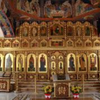
This course will look at some issues of theological controversy between East and West.
Ecclesiology
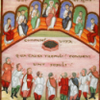
This course explores the mystery of the Church as seen in the light of Vatican II.
Ecumenical Biblical Hermeneutics

The aim of this first set of readings is to gain familiarity and/or to review the literary history of the Bible: namely, religious, socio-political, cultural factors which shaped the structure and content of both testaments.
Ecumenical Hagiology
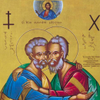
In the lives of the sains lifes " lives" the Christian vision of God, man, and the world which stand all out very clearly. Men can learn almost as much about the real meaning of Christianity from the legends of the saints produced within the tradition of the Church as from the authentic lives themselves. Through the reading and studying the lifes of the saints who arrived before us in the promised land, we came to know how God works in the daily lives of Christians and how faith can be lived not only in good times but especially during persecution and suffering. This helps us to appreciate more our faith and make us grow in loving our brothers as part of God's providence.
Ecumenical Theology

As reasoned discourse about God ecumenical theology is focussing on God’s will for unity among Christians.
History of the Ecumenical Movement

Like all movements, ecumenism had its beginnings and thus it has a history to be studied.
Introduction to Catholic Tradition

This course gives a survey on the Catholic tradition by examining a series of documents like Lumen Gentium and other documents of Vatican II.
Introduction to the Protestant Tradition
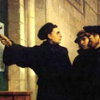
This course helps us to get in touch and explore with the this 16th century religious movement the originated in western Europe over against the prevailing Roman Catholicism.
Liturgy
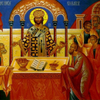
Liturgy is primary theology.
Liturgy Part One
The course provides the theological and historical foundations for understanding the evolution of Christian liturgical forms, and pastoral practice. The course will examine the major moments in the historical development of the liturgy in both East and West from the New Testament era with its Jewish foundations to the present.
Liturgy Part Two
The course will examine the major moments in the historical development of the liturgy in both East and West from the New Testament era with its Jewish foundations to the present. Attention will be given to the role of ritual and symbol in human life, the relationship of liturgy to society and culture, and critical approaches to liturgical practice.
Methods in Ecumenical Dialogue

Ecumenical dialogue requires a methodology to move from disagreement to consensus.
Sacramental Life Part I
Part One includes: Baptism, Confirmation, Eucharist.
Sacramental Life Part II
Part Two includes: Anointing, Reconciliation, Marriage, Ordination.