



Individual courses
Based on the firm belief that academic excellence should not be limited to those studying for a degree, the university takes pride in offering further education programmes (leading to Certificates of Advanced Study) and individual courses to anyone wishing to pursue their studies with a flexible and personalised approach.
Certificates of Advanced Study and individual courses are all offered with tutoring and assessment. They are graded in the same way as Bachelor and Master level courses. Domuni offers over 1000 individual courses as well as several Certificates of Advanced Study in Theological Studies, Philosophical Studies, Human Rights, Canon Law, or Business.
Students will:
- study at their own pace, from anywhere in the world;
- have access to the learning platform MyDomuni, where they will become part of an international academic community of learners;
- be supervised by a dedicated academic tutor who will accompany them at every step of the way.
Choose your course by using the search engine and clicking on the course title to learn more about each offer.
Courses search
Introduction to Philosophy of Law [2507]

Law raises fundamental philosophical questions about its nature, purpose, and justification. This course introduces the major traditions of legal philosophy, such as natural law and legal positivism, and examines their relationship to morality and politics. It also addresses African customary law and Sharia, and their interaction with modern legal systems.
Introduction to Philosophy [2254]
What is philosophy, and how does it differ from other ways of asking questions? This course introduces philosophy as a critical and rational inquiry into fundamental questions about existence, knowledge, and values. It traces the discipline's origins in ancient Greece, especially through Socrates, Plato, and Aristotle, and offers an overview of its main branches.
Introduction to Plato and Aristotle [2483]
Plato and Aristotle laid the foundations of Western philosophy through two complementary approaches. This course first explores Plato's thought, from the search for truth to the Theory of Forms. It then turns to Aristotle, whose philosophy draws on the observation of the natural world and develops key concepts in logic and metaphysics.
Introduction to Sacred Scriptures
The course aims at furnishing the student withe the appropriate tools for a meaningful of the Biblical text, with particular reference to its spiritual, liturgical and pastoral context. The course will further aim at providing a basis familiarity with, and a critical assessment of contemporary exegetical methods.
Introduction to Saint Paul
An introduction to the Life, Epistles and Theology of Saint Paul.
Introduction to the Gospel of Mark
The Gospel of Mark is distinctive within the New testament. It may be the oldest Gospel, but it post-dates some of Paul’s letters, from which we already have a good picture of the preaching of Peter and Paul. Mark paints Jesus in down to earth human form, willing to change his mind, vulnerable to the opinions of others, and especially those of the ones who opposed him.
Introduction to the Pentateuch

All the Bibles, either Hebrew or Catholic or Protestant or Orthodox, agree on the first part of the Biblical Canon, that is the Pentateuch.
Introduction to the Protestant Tradition

This course helps us to get in touch and explore with the this 16th century religious movement the originated in western Europe over against the prevailing Roman Catholicism.
Introduction to the Synoptic Gospels - Part I
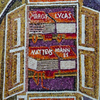
How are the Gospels of Mark, Matthew and Luke interrelated? Did Matthew and Luke both use a written source 'Q' and Mark, when composing their Gospels? Did they each have their own sources as well?
Introduction to the Synoptic Gospels - Part II
This course introduces you to the debates about the meaning of the Gospels of Matthew, Mark and Luke/Acts. What were the theological interests of the authors of the Synoptic Gospels?
Introduction to the Synoptic Gospels - Part III
What is the Jesus presented in the Gospels of Matthew, Mark and Luke like? How did he understand himself? How did the Evangelists understand him? Is that the same or different to the understanding of the disciples?
Introduction to Theology
This course will provide a general introduction to Theology.
Islam: Practices and Beliefs [2649]

Sunni Islam rests on articles of faith and religious practices that form its framework. This course introduces these foundations, including the Five Pillars of Islam, and the main differences between Sunnism and Shiism. It also presents the doctrinal debates surrounding the sources of Islam, particularly the Sunna and the Sīra.
Islamic Theology [2659]

This course presents the foundations and principal schools of Islamic theology (kalām) between the eighth and fourteenth centuries.
Issues In Epistemology and Philosophy of Science [2509]
At the heart of this course lies the debate between the foundationalism of René Descartes and the fallibilism of Karl Popper. It examines epistemic justification and the nature of scientific knowledge, and presents Kant's theory of synthetic a priori judgments as a possible reconciliation between the two. It also considers the significance of these debates for science education.
Issues in Genomic Research

A Systematic Review and Hermeneutic Exploration of the Management of Incidental Findings in Genomic Research
Jacques Dupuis' Theology of Religions
In order to have a better understanding of Dupuis’ viewpoints, the study will put side-by-side Dupuis’ ideas and those of pluralism, exclusivism and inclusivism. For this reason, the three approaches to the theology of religions will be briefly discussed. Likewise, the study also briefly presents the understanding of the Congregation for the Doctrine of the Faith (CDF) concerning the issues raised.
Jesus Christ and the World Religions
The Unique and Universal Mediation of Jesus Christ in Relation to the Theology of Religions
Jewish Heroines of the Deuterocanonical Books of the Old Testament: A Study of Judith, Sarah and Esther

Students will be introduced to the methods known as Rhetorical Biblical Criticism and Theological Criticism of the Bible.
John Locke's Epistemology and Political Philosophy [2497]
John Locke's political thought and theory of knowledge have profoundly shaped modern philosophy. This course studies both through his major works, Two Treatises of Government and An Essay Concerning Human Understanding. It examines key notions such as natural rights, the social contract, and religious toleration, as well as his emphasis on experience as the source of knowledge.