




Master 2 Concentration: Biblical Studies
Length: 1 year (can be spread over 2 calendar years)
Preparing for degree : Master of Arts in Theology
Entry requirements: MA1 in Religious Studies or MA1 in Theology (or equivalent)
Choose 4 courses and 1 research seminar from below - to be approved by the Director of Studies
YEAR 2 OF THE MASTER’S IN THEOLOGY – CONCENTRATION: BIBLICAL STUDIES
The second year of the Master’s Degree in Theology (M2 – Master 2), with a concentration in Biblical Studies, offers advanced and specialized training designed for students who wish to deepen their understanding of the Scriptures in a rigorous academic framework. As its title indicates, this program focuses specifically on the scientific, historical, literary, and theological study of the Bible, enabling students to engage critically and methodically with biblical texts.
This year represents a decisive stage in the academic journey of theology students. It builds upon the foundational knowledge acquired during the first year (M1) and leads students toward a high level of scholarly competence. The program is structured to foster both intellectual autonomy and methodological precision. Students are encouraged not only to interpret biblical texts but also to situate them within their historical, linguistic, and cultural contexts.
A central objective of the program is to introduce students to a variety of hermeneutical approaches. These include historical-critical methods, literary analysis, narrative criticism, canonical approaches, and contemporary interpretative frameworks. By exploring these diverse methodologies, students gain the tools necessary to approach Scripture with both rigor and openness, understanding the complexity and richness of biblical traditions.
In addition to methodological training, the program places strong emphasis on the in-depth study of specific books or corpora within the Bible. Students engage closely with selected texts from both the Old and New Testaments, analyzing their structure, themes, theological significance, and reception history. This close reading is supported by the study of biblical languages—primarily Hebrew and Greek—as well as by an exploration of the historical and cultural environments in which these texts emerged. Such interdisciplinary grounding allows students to grasp the Bible not as an isolated document, but as a living corpus embedded in the ancient world.
A key component of the M2 year is the writing of a substantial research thesis. Under the supervision of a qualified professor, each student undertakes an original research project that reflects their academic interests and specialization. The thesis must demonstrate the student’s ability to formulate a clear research question, engage critically with existing scholarship, and develop a coherent and well-argued analysis. With a required length of approximately 350,000 characters (including spaces), the thesis represents a significant scholarly achievement.
The research process culminates in a formal defense before a jury. This defense is an essential moment in the student’s academic formation, as it provides an opportunity to present and discuss their work in a scholarly setting. It also serves as a preparation for future academic endeavors, particularly doctoral studies.
Successful completion of the Master’s degree in Theology – Concentration: Biblical Studies opens several pathways. Graduates are qualified to teach in academic or ecclesial contexts, depending on their background and professional orientation. Moreover, the program provides the necessary preparation for pursuing doctoral studies (PhD), both in theology and in related disciplines such as religious studies, history, or philosophy.
PROGRAM STRUCTURE
The program is carefully structured to balance coursework and research, ensuring a comprehensive and progressive learning experience. It consists of two main components:
An Educational Component, which includes specialized courses and interactive online seminars. These courses are designed to deepen knowledge in specific areas of biblical studies while reinforcing methodological skills.
A Research Component, centered on the writing of a thesis under the supervision of a research director. This component allows students to apply their knowledge in an original and sustained research project.
The distribution of credits (ECTS) reflects this dual structure:
Courses and Assignments:
4 courses – 24 ECTS
These courses provide advanced instruction in key areas of biblical studies and require regular assignments and evaluations.
Online Seminar and Assignments:
1 seminar – 6 ECTS
The seminar complements the courses by fostering collaborative research and discussion among students.
Research (Thesis):
1 thesis – 30 ECTS
The thesis constitutes the core of the academic year and represents half of the total credits.
This balanced structure ensures that students develop both specialized knowledge and research skills, preparing them for advanced academic or professional work.
The list of courses available in the Master 2 program – Concentration: Biblical Studies is provided with detailed descriptions. Students are invited to choose their courses after completing their administrative registration. This choice is then reviewed and validated by the Board of Studies, ensuring coherence with the student’s academic profile and research objectives.
SEMINARS
The pedagogical approach of Domuni Universitas goes beyond individual reading and written assignments. A distinctive feature of the program is the integration of interactive online seminars, which play a central role in the academic experience of Master’s students.
These seminars are designed as true research workshops. They are conducted synchronously, meaning that all participants meet at scheduled times and engage in collective study. This format encourages active participation, intellectual exchange, and real-time dialogue between students and professors.
During the seminars, students are invited to present their research, discuss methodological questions, and critically engage with the work of others. This collaborative environment fosters a dynamic and stimulating academic culture, where knowledge is constructed through dialogue rather than transmitted unilaterally.
The seminars are led by experienced professors who guide the discussions and ensure their academic rigor. They also provide personalized feedback, helping students refine their research questions and methodologies.
Importantly, the work carried out in these seminars may lead to publication opportunities. Selected contributions can be published in Telos, the university’s academic journal. This possibility offers students an introduction to scholarly publishing and enhances their academic profile.
ASSESSMENT OF KNOWLEDGE
Assessment in the Master 2 program is designed to evaluate both the acquisition of knowledge and the development of analytical and writing skills.
Each course is assessed through two main components:
A 10-question quiz, which tests the student’s understanding of key concepts, texts, and methodologies.
A long research paper (10–15 pages), which allows the student to explore a specific topic in depth, demonstrating their ability to analyze sources, construct arguments, and engage with scholarly literature.
These assessments ensure a balanced evaluation of both factual knowledge and critical thinking.
At the end of the academic year, the thesis defense constitutes the final and most significant assessment. This oral examination, conducted before a jury, evaluates the quality of the research, the coherence of the argument, and the student’s ability to present and defend their work.
FLEXIBILITY
One of the strengths of the Domuni Universitas program is its high degree of flexibility, which is particularly well suited to students with professional or personal commitments.
Students have the possibility to spread one academic year over two calendar years. This allows them to adapt their pace of study to their individual circumstances without compromising the quality of their learning experience. Importantly, this extension does not require re-enrollment or additional tuition fees.
Since the Covid-19 pandemic, assessments—including thesis defenses—can be conducted via videoconferencing. This innovation has proven to be both efficient and beneficial. The thesis defense, which lasts approximately one hour, is recorded and conducted in front of a jury, ensuring the same level of academic rigor as in-person examinations.
This approach offers several advantages: it reduces the need for travel, thereby saving time and financial resources; it contributes to environmental sustainability by limiting carbon emissions; and it ensures continuity of academic activities in situations where physical presence is not possible.
ACCESS AND ENROLLMENT
Another notable feature of the program is the flexibility of enrollment. Registration is open throughout the year, allowing students to begin their studies at a time that suits them.
Once the registration process is completed, students receive a personal access code to the Domuni online learning platform, known as MyDomuni. This platform provides access to all course materials, assignments, and communication tools. Students can therefore begin their studies immediately, without having to wait for a fixed academic calendar.
As mentioned above, the possibility of extending the academic year over two calendar years provides additional flexibility. This system is particularly advantageous for international students and for those balancing studies with professional or family responsibilities.
In summary, the second year of the Master’s in Theology – Concentration: Biblical Studies at Domuni Universitas offers a rigorous, flexible, and research-oriented program. It combines academic excellence with innovative pedagogy, preparing students for advanced scholarly work and for meaningful engagement with the biblical tradition in contemporary contexts.
Choose 4 courses and 1 research seminar from below - to be approved by the Director of Studies
List of Courses
Prophets Part I
An Introduction to the Prophetical Phenomenon
The prophets understand themselves as inspired by God and claim that what they say is word of God. This is obvious from the very frequent formula they use « Thus speaks the Lord »...
Prophets Part II
Minor Prophets
Study of the Writing Prophets in Chronological Order
Prophets Part III
Isaiah, Jeremiah, Ezekiel
Study of the Writing Prophets in Chronological Order: from the Exile to the New Testament
The Gospel of St John

The principal aim of the course will be to furnish an appreciation of Johannine literature as Good News, with particular reference to the theological perspective of the author. The course will further aim at providing a basic familiarity with, and a critical assessment of, contemporary critical thinking on the Johannine writings, particularly the Gospel of John.
The Book of Tobit

The name which designates the book has not always been the same through the centuries. The name « Tobiah » in English or « Tobie » in French comes from the Latin Vulgate which gives the same Latin name, Tobias, to the father and the son. It has been used in the past decades but is generally no longer in use.
The Book of Esther

The story of Esther
The Book of Judith

The book of Judith is named after its main hero whose achievements it tells and glorifies. Like the books of Tobit and Esther, the book of Judith focuses on a main character and tells in detail the salvation given by God in a critical situation.
Gerald O'Collins' Understanding of Symbols, Experience and Divine Revelation
An Accommodation for a Christian Approach to the World Religions and Interreligious Dialogue in the Line of Jacques Dupuis
Introduction to the Synoptic Gospels - Part II

This course introduces you to the debates about the meaning of the Gospels of Matthew, Mark and Luke/Acts. What were the theological interests of the authors of the Synoptic Gospels?
Introduction to the Synoptic Gospels - Part III
What is the Jesus presented in the Gospels of Matthew, Mark and Luke like? How did he understand himself? How did the Evangelists understand him? Is that the same or different to the understanding of the disciples?
Introduction to the Pentateuch

All the Bibles, either Hebrew or Catholic or Protestant or Orthodox, agree on the first part of the Biblical Canon, that is the Pentateuch.
Historical Books of the Old Testament

In this course we look at the Hebrews’ arrival in the Promised Land and continue right up to the end of their existence as an independent nation when disaster overwhelmed them.
New Testament Events
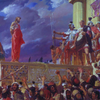
This course is part of the book of Bieke Mahieu, Between Rome and Jerusalem. Herod the Great and His Sons in Their Struggle for Recognition: A Chronological Investigation of the Period 40 BC-39 AD, with a Time Setting of New Testament Events. Orientalia Lovaniensia Analecta 208. Leuven: Peeters, 2012.
Newman's Theory of Doctrinal Development

Application of the Newmanian Criteriology on the Axiom "Extra Ecclesiam Nulla Salus"
Introduction to the Synoptic Gospels - Part I
How are the Gospels of Mark, Matthew and Luke interrelated? Did Matthew and Luke both use a written source 'Q' and Mark, when composing their Gospels? Did they each have their own sources as well?
Introduction to the Gospel of Mark
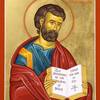
The Gospel of Mark is distinctive within the New testament. It may be the oldest Gospel, but it post-dates some of Paul’s letters, from which we already have a good picture of the preaching of Peter and Paul. Mark paints Jesus in down to earth human form, willing to change his mind, vulnerable to the opinions of others, and especially those of the ones who opposed him.
An Introduction to the New Testament using the Historical-Critical Method
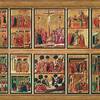
The first thing to say is that the New Testament is the second half of the Christian Bible, and follows the Old Testament and what Protestants call the Apocrypha – mostly intertestamental writings which continue to speak of God’s grace and his care for his people, the people of Israel. The New Testament is about Jesus, a Jew from Israel, who lived and died and was brought back to life again by God.
The Epistles of John

This course places the Epistles of John within their context in the New Testament with the Gospel of John. It invites you to think for yourself about the meaning of the texts, and the relationship between the Epistles and the Gospel.
E-Seminar: Contemporary Issues in Homiletics

SEM49 - Practical Theology / Homiletics
4th October - 29th November 2021
presented by Emmanuel Dumont, op
E-seminar: Our Doors Are Open. Welcoming People with Disabilities at Places of Worship

SEM66 - Seminar in Theology
4th October - 29th November 2021
presented by David H. Pereyra
Foundations of Moral Theology
The aim of this course is to discuss the precepts, principles, and values of Catholic morality.
New Testament Greek 2
Prerequisite: completion of NT Greek 1 with a minimum grade of 12/20 or previous study of New Testament Greek.
Jewish Heroines of the Deuterocanonical Books of the Old Testament: A Study of Judith, Sarah and Esther
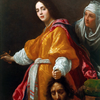
Students will be introduced to the methods known as Rhetorical Biblical Criticism and Theological Criticism of the Bible.
E-Seminar : Proclaiming Holy Scriptures

E-seminar in Theology
by David Pereyra
From 17th April to 12th June 2023
Midrashim: technique, corpus and exegetical work (TH211)
The goal is to understand the differences between halakhic and aggadic midrashim, exegetical and homiletical midrashim, midrashim and targumim.
E-seminar: The Gospel Across Cultures: Greek, Latin, and Syriac Patristic Perspectives (SEM 124)

E-seminar in Theology
Srecko Koralija
From 14 April to 8 June 2025
The New Testament in the Light of Rabbinical Literature (THEN162)

Jesus of Nazareth did not teach in a cultural vacuum: he and the Sages of the Talmud (successors to the Pharisees) shared the common context of Second Temple Judaism. This course offers an insight into this shared historical and religious universe, to better understand the links and differences between the message of Jesus in the New Testament and the Jewish rabbinical tradition. It highlights how these two great traditions respond to and influence each other, while following distinct paths.
E-Seminar: The miracle narratives in both the Old and New Testaments

E-Seminar in Theology
From October 6 to November 30, 2025
The Arabic Bible in Shared Spaces (SEM146)

This seminar explores the history of the earliest Arabic translations of the Bible through the study of ancient manuscripts and their historical, cultural, and religious contexts. It examines the role of the Scriptures within Arabic-speaking communities as well as the Islamic theological and cultural influences that shaped these translations. Particular attention will be given to the Greek and Syriac origins of the Arabic biblical texts and to the contemporary issues related to their interpretation.
This seminar will take place from March 1 to April 25, 2027.
The economic thought of Thomas Aquinas (SEM147)

Explore Thomas Aquinas’s contributions to economic thought, examining the morality of transactions, economic ethics, and the historical context of medieval economics.
Message to Movement : a preaching intensive (SEM149)
E-seminar in Theology
E-seminar: The Gospels Across Cultures (SEM 157)

E-seminar in Theology
Srecko Koralija
From October 5th to November 29th, 2026