



Individual courses
Based on the firm belief that academic excellence should not be limited to those studying for a degree, the university takes pride in offering further education programmes (leading to Certificates of Advanced Study) and individual courses to anyone wishing to pursue their studies with a flexible and personalised approach.
Certificates of Advanced Study and individual courses are all offered with tutoring and assessment. They are graded in the same way as Bachelor and Master level courses. Domuni offers over 1000 individual courses as well as several Certificates of Advanced Study in Theological Studies, Philosophical Studies, Human Rights, Canon Law, or Business.
Students will:
- study at their own pace, from anywhere in the world;
- have access to the learning platform MyDomuni, where they will become part of an international academic community of learners;
- be supervised by a dedicated academic tutor who will accompany them at every step of the way.
Choose your course by using the search engine and clicking on the course title to learn more about each offer.
Courses search
E-séminar - Ethics and Technology: AI, Surveillance, and Digital Responsibility

This seminar examines the ethical challenges raised by contemporary technologies such as artificial intelligence, digital surveillance, and data-driven systems. It explores issues of responsibility, justice, privacy, and human agency through interdisciplinary analysis and concrete case studies. Participants will develop critical tools to engage with current debates on algorithmic bias, digital rights, and the social impact of emerging technologies.
This seminar will take place from March 1 to April 25, 2027.
E-seminar - Introduction to Process Philosophy

This seminar aims to offer students an immersion in processual metaphysics, exploring its conceptual foundations and interdisciplinary implications. The approach adopted is not limited to theoretical understanding: it also engages in critical reflection on how processual thinking can transform our views of knowledge, ethics and social relations.
This seminar will take place from March 1 to April 25, 2027.
E-seminar : Artificial intelligence and its challenges (SEM119)
E-seminar in philosophy
Didier Peters
From 14 April to 8 June 2025
E-seminar : Bioethics and Human Enhancement: Where Should We Draw the Line?

This seminar examines the ethical, philosophical, and social challenges raised by human enhancement technologies. Through an interdisciplinary approach combining philosophy, medicine, and technology studies, participants will explore debates on genetic engineering, neurotechnology, life extension, human dignity, and the moral limits of bioenhancement.
This Seminar will take place from October 4 to November 28, 2027.
E-Seminar : Leadership, Followership, and AI: Rethinking Responsibility and Error (SEM134)

This e-seminar in Philosophy will take place from 6th October to 30th November 2025. Srećko Koralija explores the roles of leadership and followership in a world increasingly influenced by artificial intelligence and algorithmic decision-making.
E-Seminar : Women, justice, recognition and religion. Thinking these concepts together from Martha Nussbaum

This e-seminar in Philosophy will take place from 30 September to 24 November 2024. Dive into contemporary struggles with Maxime Allard. Justice, recognition, religion: three inseparable concepts for understanding the place of women today. Martha Nussbaum serves as our compass, with her insights that shed light and inspire action. This seminar invites you to question the mechanisms that are still blocking the recognition of women in the world.
E-seminar- Religious Exemptions in Liberal or Democratic States

SEM 43 - Philosophy and religious Studies
April 20th - June 15th, 2020
presented by Isaac Mutelo
E-seminar: Analytical Jurisprudence: Theories and Practical Application

E-seminar in Philosophy and Law
by Isaac Mutelo
From 3rd October to 28th November 2022
E-Seminar: Artificial Intelligence and Robotics: Ethical Issues (SEM132)

This seminar will take place from 6th October to 30th November 2025. It explores the ethical implications of artificial intelligence (AI) and robotics by engaging with key ethical issues and aspects, including privacy, autonomous systems, job displacement, algorithmic bias, surveillance issues, and the moral status of machines.
E-Seminar: Gender Equality: Culture, Religion and Politics

E-seminar in Philosophy/Religion
by Isaac Mutelo
From 02 october to 27 november 2023
E-seminar: Indian Logic

SEM - Philosophy
5th October - 30th November 2020
presented by Rajen Lakra
E-Seminar: Learning to Dwell

E-seminar in Philosophy
by Jaco Kruger
From 17th April to 12th June 2023
E-Seminar: Natural Law: its origin and implication

E-seminar - Philosophy and Natural Law
by Lorenzo Gallo
From 5th to 26th July 2021 - Summer Course
E-Seminar: Read and think with Minima Moralia by Theodor Adorno (SEM128)

This e-seminar in Philosophy will take place from 6th October to 30th November 2025.
E-seminar: The Dignity of the Human Person
E-seminar in Philosophy and Social Sciences
by Jaco Kruger
From 11th April to 6th June 2022
Epistemology [2480]
What is knowledge, and how has philosophy tried to define it? This course offers an introduction to some of the key themes of epistemology, the theory of knowledge. It examines the concept of knowledge and traces the historical development of the discipline.
Ethics of Artificial Intelligence and Robotics [2490]
Artificial intelligence (AI) and robotics raise a wide range of ethical questions. This course introduces their foundations and the philosophical questions they pose about intelligence and consciousness. It then applies major ethical theories to these technologies and examines contemporary debates, such as privacy, surveillance, and algorithmic bias.
Ethics: from Ancient to Modern [2277]
From Plato to contemporary utilitarianism, the history of ethics reveals a wide diversity of possible foundations for morality. This course explores the main moral traditions, from Aristotle's ethics of virtue and Kant's ethics of duty to the utilitarian theories of Bentham and Mill. It offers a comparative understanding of virtue ethics, deontology, and consequentialism.
Foundations of Ethics [2527]
The ethical thought of Plato and Aristotle laid the classical foundations of Western moral philosophy. This course introduces these foundations through a close reading of their major works, including the Republic and the Nicomachean Ethics. It explores key notions such as justice, virtue, happiness, and practical wisdom.
Gerald O'Collins' Understanding of Symbols, Experience and Divine Revelation
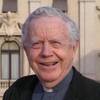
An Accommodation for a Christian Approach to the World Religions and Interreligious Dialogue in the Line of Jacques Dupuis