



Individual courses
Based on the firm belief that academic excellence should not be limited to those studying for a degree, the university takes pride in offering further education programmes (leading to Certificates of Advanced Study) and individual courses to anyone wishing to pursue their studies with a flexible and personalised approach.
Certificates of Advanced Study and individual courses are all offered with tutoring and assessment. They are graded in the same way as Bachelor and Master level courses. Domuni offers over 1000 individual courses as well as several Certificates of Advanced Study in Theological Studies, Philosophical Studies, Human Rights, Canon Law, or Business.
Students will:
- study at their own pace, from anywhere in the world;
- have access to the learning platform MyDomuni, where they will become part of an international academic community of learners;
- be supervised by a dedicated academic tutor who will accompany them at every step of the way.
Choose your course by using the search engine and clicking on the course title to learn more about each offer.
Courses search
A Brief History of Medieval Philosophy I

Can we be both Christians and genuine philosophers? Are faith and philosophy mutually exclusive, or not?
A Brief History of Medieval Philosophy II
Can we be both Christians and genuine philosophers? Are faith and philosophy mutually exclusive, or not?
A Brief Introduction to and Overview of Classical Religious Hinduism

There are many different spiritual pathways that were born in the Indian sub-continent: Buddhist, Jain, Sikh, for example, and others that came to India such as Christian and Muslim. Hindu spirituality which represents the spiritual quest of the vast majority of the people of India is rooted in the relentless and uninterrupted search of the seers from the Indian sub-continent.
Aesthetics [2493]
Art, beauty, and aesthetic experience are at the heart of aesthetics. This course offers a preliminary introduction to the discipline, tracing the development of aesthetic thought from ancient philosophy to contemporary theories. It also presents the distinctive features of Western and Indian aesthetic traditions.
African Myths and Philosophy

This course was born out of an effort to interpret the language of Traditional Africa in terms of Western philosophy, and at the same time to see if the latter did not perhaps have, not only correlations with, but even discernible roots in the former.
Analytic Philosophy
This course seeks to introduce students to analytic philosophy.
Aquinas' Notion of Friendship [2495]
For Thomas Aquinas, friendship plays an essential role in the pursuit of true happiness. This course explores the sources of his thought, from Aristotle and Cicero to Scripture and St. Augustine, before presenting his synthesis. It shows how, in his view, friendship grounded in virtue and charity ultimately leads the person toward union with God.
Aristotle and the Aristotelian Tradition
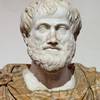
This course introduces some of the key elements in Aristotle's thought.
Being and Knowing [2485]
What does it mean to know something, and when can a belief be considered justified? This course introduces epistemology through its principal theories of knowledge, from the classical account of knowledge as justified true belief to more recent approaches. It also examines key challenges, such as the Gettier problem and skepticism.
Bioethics I : Foundations of Modern Bioethics

Legal, Philosophical and Moral dimension
Bioethics II : Informed Consent and Risk Analysis
Investigators have a duty to ensure subjects give not only informed, but voluntary consent?
Bioethics III: Clinical Ethics & Legal Implications
Concerned with restoring and strengthening bonds between professionals, patients and families, not simply dealing with principles like bioethics.
Canon Law- Part I

Law is a juridical system that organizes the social aspects of humankind. For that reason the systematic oranization, the content and the governing principle of canon law and its different branches should and do conform to how well the Church’s social dimension and social structures are understood at each moment in time.
Contemporary Issues in Bioethics I

To show the implications of normative theories for specific moral issues or contemporary debates on particular ethical issues.
Contemporary Issues in Bioethics II

To show the implications of normative theories for specific moral issues or contemporary debates on particular ethical issues.
Critical Analysis of the Modern Theory of Human Rights: Lack of A Coherent Theoretical Framework

The Universal Declaration of Human Rights (henceforth UDHR) is both a point of arrival and a point of departure regarding our contemporary understanding of human rights. As a point of arrival, the UDHR is the result of an attempt to collate the “wisdom of the ages,” in order to find the best way to ensure the protection of the rights of all—especially after the atrocities committed during the two world wars.
David Hume: The Great empiricist [2271]
A central representative of modern empiricism, David Hume is one of the most influential figures of the Scottish Enlightenment. This course studies the core dimensions of his thought, from the theory of impressions and ideas to the analysis of causation and induction. It also examines his moral philosophy, in which moral distinctions arise from sentiment rather than from reason alone.
Democracy and its Discontents in the 21st Century (SEM131)

Explore the challenges and future of democracy, including human rights, inequality, authoritarianism, and civic engagement through case studies and critical analysis.
Divine Impassibility
Divine Impassibility: A Thomistic Critique of Jürgen Moltmann’s Staurocentric Trinitarianism
E-seminar - A Philosophy of Home and Homecoming

Jaco Kruger provides an introduction to philosophical questions regarding the experience of home and the possibility of using this experience as an entryway to an examination of the human condition.
This seminar will take place online from October 5 to November 29, 2026