



Individual courses
Based on the firm belief that academic excellence should not be limited to those studying for a degree, the university takes pride in offering further education programmes (leading to Certificates of Advanced Study) and individual courses to anyone wishing to pursue their studies with a flexible and personalised approach.
Certificates of Advanced Study and individual courses are all offered with tutoring and assessment. They are graded in the same way as Bachelor and Master level courses. Domuni offers over 1000 individual courses as well as several Certificates of Advanced Study in Theological Studies, Philosophical Studies, Human Rights, Canon Law, or Business.
Students will:
- study at their own pace, from anywhere in the world;
- have access to the learning platform MyDomuni, where they will become part of an international academic community of learners;
- be supervised by a dedicated academic tutor who will accompany them at every step of the way.
Choose your course by using the search engine and clicking on the course title to learn more about each offer.
Courses search
A Brief History of Medieval Philosophy I

Can we be both Christians and genuine philosophers? Are faith and philosophy mutually exclusive, or not?
A Brief History of Medieval Philosophy II
Can we be both Christians and genuine philosophers? Are faith and philosophy mutually exclusive, or not?
A Brief History of Medieval Philosophy [2494]
Between the sixth and the fifteenth century, Christian thinkers in the Latin West engaged with the philosophical heritage of Plato and Aristotle. This course traces this history, from Augustine to William of Ockham, along with the development of scholasticism up to the rise of the medieval universities. It also explores the central relationship between faith and reason.
A Brief Introduction to and Overview of Classical Religious Hinduism

There are many different spiritual pathways that were born in the Indian sub-continent: Buddhist, Jain, Sikh, for example, and others that came to India such as Christian and Muslim. Hindu spirituality which represents the spiritual quest of the vast majority of the people of India is rooted in the relentless and uninterrupted search of the seers from the Indian sub-continent.
Aesthetics [2493]
Art, beauty, and aesthetic experience are at the heart of aesthetics. This course offers a preliminary introduction to the discipline, tracing the development of aesthetic thought from ancient philosophy to contemporary theories. It also presents the distinctive features of Western and Indian aesthetic traditions.
African Myths and Philosophy

This course was born out of an effort to interpret the language of Traditional Africa in terms of Western philosophy, and at the same time to see if the latter did not perhaps have, not only correlations with, but even discernible roots in the former.
An introduction to development economics

The scope of this course is therefore inherently cross-disciplinary.
An Introduction to Human Rights, Business and Development [2627]

The activities of transnational corporations can affect human rights, and victims often struggle to obtain remedies. This course examines the international soft-law instruments that address these practices, as well as the debate on a binding international treaty. Finally, it assesses the draft UN treaty in this field.
An introduction to international trade

The course on International Trade is designed to provide you with an introduction to the theories of international trade as well as global trade governance.
An introduction to sociology of development
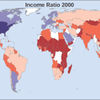
The course covers the contexts in which various development theories have surfaced, the debates surrounding each development theory, and the ideas of the key contributors.
An Introduction to the New Testament using the Historical-Critical Method

The first thing to say is that the New Testament is the second half of the Christian Bible, and follows the Old Testament and what Protestants call the Apocrypha – mostly intertestamental writings which continue to speak of God’s grace and his care for his people, the people of Israel. The New Testament is about Jesus, a Jew from Israel, who lived and died and was brought back to life again by God.
An Introduction to Thomas Aquinas

This course will enable you to explore his mind and to learn from Thomas Aquinas. The Dominican motto contemplata aliis tradere, which means contemplate and hand over to others is from Thomas, and this motto summarises the aims of the course.
Analytic Philosophy

This course seeks to introduce students to analytic philosophy.
Aquinas' Notion of Friendship [2495]
For Thomas Aquinas, friendship plays an essential role in the pursuit of true happiness. This course explores the sources of his thought, from Aristotle and Cicero to Scripture and St. Augustine, before presenting his synthesis. It shows how, in his view, friendship grounded in virtue and charity ultimately leads the person toward union with God.
Arabic, the Human Language Chosen by God [2652]

A Semitic language that long predates Islam, Arabic was profoundly shaped by Qur’anic revelation. This course explores the relationship between the Arabic language and Islam, showing how Arabic in turn shaped Islamic religious thought. Finally, it examines the contemporary development of Arabic, between Modern Standard Arabic and its dialects.
Aristotle and the Aristotelian Tradition
This course introduces some of the key elements in Aristotle's thought.
Being and Knowing [2485]
What does it mean to know something, and when can a belief be considered justified? This course introduces epistemology through its principal theories of knowledge, from the classical account of knowledge as justified true belief to more recent approaches. It also examines key challenges, such as the Gettier problem and skepticism.
Biblical Hebrew 1

Learn biblical hebrew with this very interactive course, supported by videos, audio documents and biblical texts.
Bioethics I : Foundations of Modern Bioethics

Legal, Philosophical and Moral dimension
Bioethics II : Informed Consent and Risk Analysis
Investigators have a duty to ensure subjects give not only informed, but voluntary consent?