



Individual courses
Based on the firm belief that academic excellence should not be limited to those studying for a degree, the university takes pride in offering further education programmes (leading to Certificates of Advanced Study) and Individual Courses to anyone wishing to be immersed in the intellectual heritage of the Dominicans.
Certificates of Advanced Study and individual courses are validated in the same way as Bachelor level courses. A paper of 12000-16000 characters, including spaces is required for each course. The study duration for a certificate is 12 months, according to the pace and rhythm of each student, under supervision by a tutor.
Choose between:
- 15 Certificates of Advanced Study, in Theological or Philosophical Studies
- Over 500 Individual Courses
Choose your course by using the search engine and click on the title to see the detailed outline.
- Accompanied courses – you have access to the learning platform and your studies will be supervised by an academic tutor. These courses are worth 3 ECTS credits which can be counted towards a study programme with Domuni or at another academic institution.
- Read only courses: you will receive the PDF of your chosen course within 48 hours
Courses search
A Brief History of Medieval Philosophy I

Can we be both Christians and genuine philosophers? Are faith and philosophy mutually exclusive, or not?
A Brief History of Medieval Philosophy II
Can we be both Christians and genuine philosophers? Are faith and philosophy mutually exclusive, or not?
A Brief Introduction to and Overview of Classical Religious Hinduism

There are many different spiritual pathways that were born in the Indian sub-continent: Buddhist, Jain, Sikh, for example, and others that came to India such as Christian and Muslim. Hindu spirituality which represents the spiritual quest of the vast majority of the people of India is rooted in the relentless and uninterrupted search of the seers from the Indian sub-continent.
Aesthetics [2493]
“An Introduction to Aesthetics” is a preliminary descriptive course on the main aspects of the whole research area of Aesthetics. The aim of the course is introduce the students to the world of Aesthetics.
African Myths and Philosophy

This course was born out of an effort to interpret the language of Traditional Africa in terms of Western philosophy, and at the same time to see if the latter did not perhaps have, not only correlations with, but even discernible roots in the former.
Analytic Philosophy

This course seeks to introduce students to analytic philosophy.
Aquinas' Notion of Friendship [2495]
This course examines Thomas Aquinas’ understanding of friendship and its essential role in the pursuit of true happiness. Drawing on Aristotle, Cicero, Scripture, and St. Augustine, it explores the philosophical and theological foundations of happiness and friendship before presenting Aquinas’ synthesis.
Aristotle and the Aristotelian Tradition
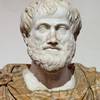
This course introduces some of the key elements in Aristotle's thought.
Being and Knowing [2485]
This course provides a comprehensive introduction to epistemology, the branch of philosophy concerned with the nature, sources, justification, and limits of human knowledge.
Bioethics I : Foundations of Modern Bioethics

Legal, Philosophical and Moral dimension
Bioethics II : Informed Consent and Risk Analysis
Investigators have a duty to ensure subjects give not only informed, but voluntary consent?
Bioethics III: Clinical Ethics & Legal Implications
Concerned with restoring and strengthening bonds between professionals, patients and families, not simply dealing with principles like bioethics.
Canon Law- Part I

Law is a juridical system that organizes the social aspects of humankind. For that reason the systematic oranization, the content and the governing principle of canon law and its different branches should and do conform to how well the Church’s social dimension and social structures are understood at each moment in time.
Contemporary Issues in Bioethics I

To show the implications of normative theories for specific moral issues or contemporary debates on particular ethical issues.
Contemporary Issues in Bioethics II

To show the implications of normative theories for specific moral issues or contemporary debates on particular ethical issues.
Critical Analysis of the Modern Theory of Human Rights: Lack of A Coherent Theoretical Framework

The Universal Declaration of Human Rights (henceforth UDHR) is both a point of arrival and a point of departure regarding our contemporary understanding of human rights. As a point of arrival, the UDHR is the result of an attempt to collate the “wisdom of the ages,” in order to find the best way to ensure the protection of the rights of all—especially after the atrocities committed during the two world wars.
David Hume: The Great empiricist [2271]
This course offers a comprehensive and systematic study of David Hume’s philosophy, presenting him as one of the most influential figures of the Scottish Enlightenment and a central representative of modern empiricism.
Democracy and its Discontents in the 21st Century (SEM131)

Explore the challenges and future of democracy, including human rights, inequality, authoritarianism, and civic engagement through case studies and critical analysis.
Divine Impassibility
Divine Impassibility: A Thomistic Critique of Jürgen Moltmann’s Staurocentric Trinitarianism
E-seminar - A Philosophy of Home and Homecoming

Jaco Kruger provides an introduction to philosophical questions regarding the experience of home and the possibility of using this experience as an entryway to an examination of the human condition.
This seminar will take place online from October 5 to November 29, 2026