




Individual courses
Based on the firm belief that academic excellence should not be limited to those studying for a degree, the university takes pride in offering further education programmes (leading to Certificates of Advanced Study) and Individual Courses to anyone wishing to be immersed in the intellectual heritage of the Dominicans.
Certificates of Advanced Study and individual courses are validated in the same way as Bachelor level courses. A paper of 12000-16000 characters, including spaces is required for each course. The study duration for a certificate is 12 months, according to the pace and rhythm of each student, under supervision by a tutor.
Choose between:
- 15 Certificates of Advanced Study, in Theological or Philosophical Studies
- Over 500 Individual Courses
Choose your course by using the search engine and click on the title to see the detailed outline.
- Accompanied courses – you have access to the learning platform and your studies will be supervised by an academic tutor. These courses are worth 3 ECTS credits which can be counted towards a study programme with Domuni or at another academic institution.
- Read only courses: you will receive the PDF of your chosen course within 48 hours
Courses search
Contemporary Issues in Bioethics II

To show the implications of normative theories for specific moral issues or contemporary debates on particular ethical issues.
Contemporary issues in Bioethics [2498]
This course explores the major ethical and political challenges of contemporary societies by examining the relationships between liberty, equality, human dignity, and collective responsibility.
Critical Analysis of the Modern Theory of Human Rights: Lack of A Coherent Theoretical Framework

The Universal Declaration of Human Rights (henceforth UDHR) is both a point of arrival and a point of departure regarding our contemporary understanding of human rights. As a point of arrival, the UDHR is the result of an attempt to collate the “wisdom of the ages,” in order to find the best way to ensure the protection of the rights of all—especially after the atrocities committed during the two world wars.
David Hume: The Great empiricist [2271]
This course offers a comprehensive and systematic study of David Hume’s philosophy, presenting him as one of the most influential figures of the Scottish Enlightenment and a central representative of modern empiricism.
Decolonisation of International Development [2630]
This course examines the decolonisation of international development, focusing on the enduring colonial structures that continue to shape power relations, knowledge production and development practices.
Democracy and its Discontents in the 21st Century (SEM131)

Explore the challenges and future of democracy, including human rights, inequality, authoritarianism, and civic engagement through case studies and critical analysis.
Discover Shi'ism I [2656]
This course traces the origins of Shiism through the events that followed the death of the Prophet Muhammad, focusing on the question of his succession, the place of ʿAlī, and the schism with Sunnism.
Discover Shi'ism II [2657]
This second part of the course examines how the martyrdom of Ḥusayn became a cornerstone of Shiite theology, spirituality, and ritual practice.
Divine Impassibility
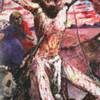
Divine Impassibility: A Thomistic Critique of Jürgen Moltmann’s Staurocentric Trinitarianism
Dominican History
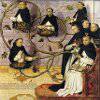
Dominican History : The preaching campaign in the Lauragais 1206-1207
Dreifaltigkeit und Gnade bei Matthias Joseph Scheeben
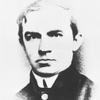
Der berühmte katholische Theologe Matthias Joseph Scheeben (1838-1888) wird hier studiert in der Sichtweise des "Konstruktionsprinzips" seiner Theologie: Gottes Dreifaltigkeit.
E-seminar - A Philosophy of Home and Homecoming

Jaco Kruger provides an introduction to philosophical questions regarding the experience of home and the possibility of using this experience as an entryway to an examination of the human condition.
This seminar will take place online from October 5 to November 29, 2026
E-séminar - Ethics and Technology: AI, Surveillance, and Digital Responsibility

This seminar examines the ethical challenges raised by contemporary technologies such as artificial intelligence, digital surveillance, and data-driven systems. It explores issues of responsibility, justice, privacy, and human agency through interdisciplinary analysis and concrete case studies. Participants will develop critical tools to engage with current debates on algorithmic bias, digital rights, and the social impact of emerging technologies.
This seminar will take place from March 1 to April 25, 2027.
E-seminar - History of Economic Thought from Antiquity to the Present

The aim of this seminar is to cover the whole history of economic thought in all its diversity, i.e. not only the contribution of economics proper since it became an autonomous discipline at the end of the eighteenth century.
This seminar will take place online from October 5 to November 29, 2026
E-seminar - Introduction to Process Philosophy

This seminar aims to offer students an immersion in processual metaphysics, exploring its conceptual foundations and interdisciplinary implications. The approach adopted is not limited to theoretical understanding: it also engages in critical reflection on how processual thinking can transform our views of knowledge, ethics and social relations.
This seminar will take place from March 1 to April 25, 2027.
E-Seminar - The Arabic Bible in Shared Spaces

This seminar explores the history of the earliest Arabic translations of the Bible through the study of ancient manuscripts and their historical, cultural, and religious contexts. It examines the role of the Scriptures within Arabic-speaking communities as well as the Islamic theological and cultural influences that shaped these translations. Particular attention will be given to the Greek and Syriac origins of the Arabic biblical texts and to the contemporary issues related to their interpretation.
This seminar will take place from March 1 to April 25, 2027.
E-seminar - The Gospels Across Cultures

The reception of the Gospel across Greek, Latin, and Syriac traditions shows how early Christianity adapted to different cultures and languages without losing its core message. By engaging local philosophies, institutions, and literary forms, these traditions enriched Christian thought. Their legacy continues to inspire dialogue with diverse cultures and religions in today's interconnected world.
From October 5th to November 29th, 2026
E-seminar : "New Homiletics", the preachers turn to the listener?

SEM 42 - Practical Theology/Homiletics
From 20th April to 15th June 2020
By Emmanuel Dumont
E-seminar : Archaeology and the Bible

SEM 41 - Archaeology and the Bible
From 7th October to 30th November 2019
by Hervé Tremblay
FROM 7TH OCTOBER 2019 TO 30TH NOVEMBER 2019. SEMINAR CLOSED
E-seminar : Artificial intelligence and its challenges (SEM119)
E-seminar in philosophy
Didier Peters
From 14 April to 8 June 2025