




News
Learning That Transforms Society
20 july 2026
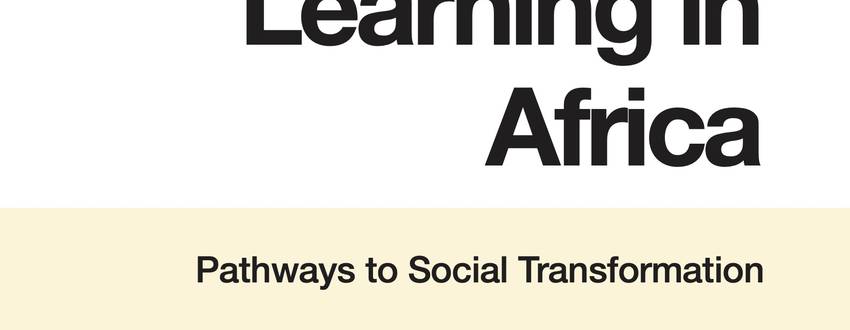
What if African universities measured their success not only by degrees awarded, but by the communities they help to strengthen? In Service Learning in Africa, Patrick Mwania argues that higher education can reconnect knowledge, responsibility, and social transformation by placing students in active partnership with the societies around them.
Rethinking the Purpose of the University
African higher education has expanded significantly, yet questions about its social relevance remain urgent. Many students still encounter lecture-based teaching, abstract curricula, and assessment systems focused more on examinations than on the ability to respond to real problems. Patrick Mwania begins from this tension. For him, universities cannot be satisfied with transmitting information or preparing graduates for employment alone. They must also form ethical citizens, capable professionals, and leaders who understand the needs of their communities. Service learning offers a way to restore this broader mission by integrating academic study, structured community engagement, and critical reflection within the curriculum.
More Than Volunteering
One of the book’s central contributions is its clear distinction between service learning and occasional volunteer work. Service learning is not an extracurricular act of generosity added to a course. It is a rigorous educational method in which students apply disciplinary knowledge to community-identified needs, reflect on what they encounter, and allow experience to reshape their understanding. Public health students may support maternal health initiatives; engineering students may design low-cost water systems; theology students may accompany peacebuilding projects; and social science students may collaborate with local authorities. In each case, the community becomes a genuine learning environment rather than a passive recipient of university expertise.
An African Intellectual Foundation
Mwania’s argument is especially compelling because he refuses to present service learning as a foreign model simply imported from Europe or North America. He anchors it in African traditions of relationality, shared responsibility, and communal formation. Ubuntu, often expressed through the idea that a person becomes fully human through others, provides a central philosophical reference. The author also draws attention to related traditions such as Botho, Omoluabi, Ukama, Harambee, and Ujamaa. Long before modern universities formalized experiential education, African societies transmitted knowledge through apprenticeship, storytelling, collective work, moral formation, and participation in community life. Service learning can therefore be understood as both innovation and recovery.
Decolonizing Knowledge Through Partnership
The book also places service learning within the wider movement to decolonize African education. Colonial systems separated formal learning from local realities, privileged foreign epistemologies, and often treated communities as objects of study. Mwania proposes a different relationship. Communities must be recognized as co-educators and co-producers of knowledge. Their priorities, experience, and cultural wisdom should shape projects from the beginning. This requires reciprocity, shared decision-making, long-term partnership, and careful attention to power. Without these safeguards, service learning can become paternalistic or extractive. With them, it can promote epistemic justice and restore dignity to forms of knowledge that universities have too often ignored.
From Reflection to Transformation
Experience alone does not produce learning. Reflection is the bridge that connects action with intellectual and moral growth. Drawing on John Dewey, David Kolb, Paulo Freire, transformative learning theory, and social constructivism, Mwania shows how students learn by acting, questioning, interpreting, and acting again. Structured journals, group discussions, portfolios, community feedback, and theological reflection enable students to examine their assumptions and understand the structural causes of poverty, inequality, exclusion, or environmental degradation. This process can transform not only academic understanding but also identity, vocation, empathy, and civic responsibility. Students are invited to move beyond charity toward justice, and beyond technical competence toward ethical leadership.
Faith, Human Dignity, and the Common Good
A major strength of the volume is its attention to Catholic higher education. Service learning resonates closely with Catholic Social Teaching through its concern for human dignity, solidarity, subsidiarity, care for creation, and the preferential option for the poor. In this perspective, education is not simply professional preparation; it is integral formation. Encounters with vulnerable communities can become occasions for spiritual discernment, compassion, and deeper awareness of the common good. Mwania also shows how African spirituality, with its emphasis on community and the sacred character of everyday life, enriches this process. Faith becomes concrete when knowledge is placed at the service of justice, reconciliation, and human flourishing.
Practical Pathways for Universities
Service Learning in Africa is not limited to principles. It examines curriculum design, faculty preparation, ethical guidelines, assessment, institutional governance, policy development, technology, and long-term sustainability. Case studies from African universities illustrate diverse possibilities, from health campaigns and environmental initiatives to prison counselling, social entrepreneurship, digital mentoring, and community-based research. The author insists that successful programs require more than enthusiasm. Universities need dedicated structures, trained faculty, stable partnerships, appropriate funding, and evaluation systems that measure both student learning and community impact. Service learning must be embedded in institutional strategy if it is to become more than a short-lived project.
Education as a Pathway to Hope
Patrick Mwania writes from extensive experience in higher education leadership, curriculum development, and community-engaged learning. As Vice Chancellor of Tangaza University in Nairobi, he brings together academic analysis and institutional practice. His book speaks to educators, university leaders, researchers, church institutions, policymakers, and all those concerned with Africa’s future. Its message is demanding but hopeful: universities can become places where knowledge is tested by reality, where communities are respected as partners, and where students learn that education carries responsibility. By reconnecting theory with practice and learning with service, African higher education can form graduates prepared not only to succeed, but to transform society. This vision also challenges institutions to reconsider how they define excellence. Rankings, publications, and graduate employment matter, but they cannot exhaust the meaning of educational success. A university also proves its value when it strengthens public trust, supports local creativity, and equips students to work across social, cultural, and disciplinary boundaries. In that sense, service learning is not an optional supplement to academic life. It is a practical expression of the university’s responsibility to accompany society, especially where communities face exclusion, uncertainty, or limited opportunity.
This book is available in English.
→ Discover and purchase the book in digital or print format.