




News
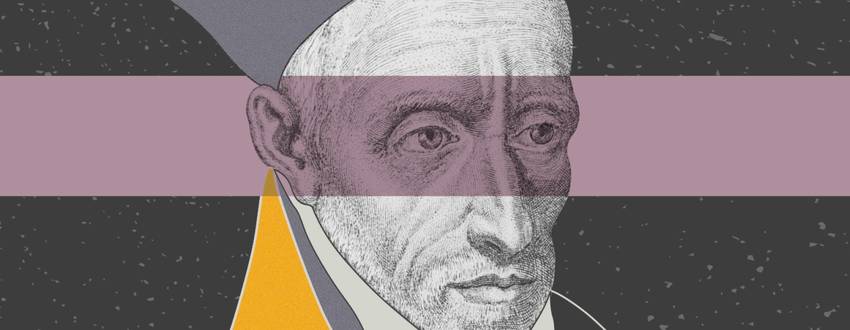
When Suárez Illuminates Our Modernity
12 june 2026
When Suárez illuminates our modernity: Jean-Paul Coujou brings a major thinker back to life, whose work helps us understand the roots of our debates on law, sovereignty, freedom, and peace.
Where do our ideas of sovereignty, international law, or political legitimacy come from? Why do contemporary debates on authority, the common good, or peace continue to raise questions that remain unresolved?
In Posterity of Suárez: Politics, History and Metaphysics, Jean-Paul Coujou takes us to the intellectual sources of modernity through the discovery of Francisco Suárez, a Spanish thinker as discreet as he was influential. Through a fascinating investigation, he reveals how several key concepts of our political world are rooted in Suárez’s work. A stimulating journey into the origins of contemporary thought.
An Overlooked Author at the Heart of Intellectual History
The name Francisco Suárez (1548–1617) is rarely mentioned alongside Hobbes, Locke, Rousseau, or Kant. Yet his influence on Western thought is considerable. A Jesuit, theologian, jurist, and philosopher, he stood at a pivotal moment in European intellectual history, when the medieval heritage encountered the new aspirations that would give birth to modernity.
It is precisely this unique position that interests Jean-Paul Coujou. For Suárez was not merely an heir to the scholastic tradition; he was also one of the thinkers who made possible a new relationship to politics, law, and history. His work accompanied the transition from one world to another. It sheds light on how Europe gradually rethought the notions of power, freedom, political community, and justice.
Far from being a simple historical study, the book seeks to explain how ideas that now seem self-evident were gradually shaped over the centuries.
A Genealogy of Modernity
The originality of the book lies in its approach: rather than studying Suárez in isolation, Jean-Paul Coujou traces the influence of his thought throughout the history of modern philosophy. From Grotius to Heidegger, through Hobbes, Locke, Spinoza, Leibniz, Rousseau, and Kant, he highlights an intellectual dialogue spanning several centuries, of which Suárez was one of the initiators.
This renewed reading of intellectual history reveals continuities that often remain hidden behind the great ruptures of modernity. Above all, it shows that the concepts that still structure our political thought are the result of ancient debates in which Suárez played a central role.
Thinking Politics Through the Human Being
One of the book’s central themes is the profound connection between metaphysics and politics. For Suárez, reflecting on the city and political community first requires questioning the human being: freedom, responsibility, and place in the world.
Jean-Paul Coujou shows that every political order rests upon a particular vision of humanity. What is the foundation of authority? Why should one obey the law? How can individual freedom be reconciled with collective life? These questions run throughout Suárez’s work and remain strikingly relevant today. They remind us that political and legal issues are always rooted in a conception of the human condition.
Law, Justice, and the Common Good
Another major dimension of the book concerns natural law and the law of nations. In an era marked by religious wars and political transformations, Suárez sought to define the foundations of a just order that could transcend particular interests.
His reflections on law, justice, and political community profoundly shaped modern thought, notably by contributing to the emergence of a conception of law grounded in human dignity and universal principles.
Through this analysis, Jean-Paul Coujou demonstrates how relevant these debates remain today: How can a stable international order be built? On what basis should human rights be founded? How can state sovereignty be reconciled with universal justice? These questions continue to shape our world.
A Reflection on Sovereignty and Democracy
One of Suárez’s most innovative contributions concerns the origin of political power. Contrary to the absolutist theories of his time, he argued that authority originates in the community before being delegated to rulers.
This insight opened new perspectives on consent, political legitimacy, and citizen participation in public life. Jean-Paul Coujou highlights its importance for understanding the emergence of modern conceptions of sovereignty.
Readers thus discover a little-known Suárez: not only a theologian and metaphysician, but also a thinker of political community whose ideas anticipated many of the major democratic debates of the centuries to come.
Why Read Suárez Today?
One of the book’s greatest achievements is to show that the most contemporary questions are often also the oldest. How can political authority be founded without giving way to arbitrariness? How can individual freedom and the common good be reconciled? On what foundations can a just and lasting international order be built? These questions, which permeate contemporary debates, find remarkably fertile formulations in Suárez’s thought.
By tracing the legacy of this thought through several centuries of European reflection, Jean-Paul Coujou invites us to rediscover an author whose often discreet influence continues to shape our understanding of politics and law. His book offers far more than a scholarly study: it provides a profound reflection on the foundations of our political world. It is a stimulating read for anyone wishing to understand not only where our institutions and ideas come from, but also what forms of future they may lead us toward.
Jean-Paul Coujou’s Intellectual Journey
A recognized specialist in modern philosophy and metaphysics, Jean-Paul Coujou has devoted many years of research to the relationship between being, politics, and history. Professor Emeritus at the Catholic Institute of Toulouse and member of the Michel Villey Institute, he is the author of around thirty works exploring the philosophical foundations of modernity.
This expertise is evident on every page of the book. Scholarship is always placed at the service of understanding texts and problems. The author does not merely seek to reconstruct a doctrine; he invites readers into a living reflection in which the great questions of the past illuminate the concerns of the present.
This book is available in French.
→ Discover and purchase the book in digital or print format.