




News
Heidegger, or the Urgency of Learning to Inhabit the World Again
26 august 2026
Technology promises efficiency, control, and progress. Yet as humanity transforms the world, does it risk losing sight of its own being? In Heidegger and Modernity, Jacques Attoumbré Yoboua offers a clear and timely reading of Martin Heidegger’s philosophy, demonstrating how his diagnosis continues to illuminate the ethical, scientific, social, political, economic, cultural, and ecological challenges of our age.
Modernity: A Promise Turned into a Question
Our age celebrates innovation, speed, and performance. Artificial intelligence, globalization, and the intensive exploitation of natural resources have enabled humanity to reshape its environment on an unprecedented scale. Yet behind these achievements lies a deeper question: what becomes of humanity when everything is viewed through the lens of efficiency?
This is the central question explored in Heidegger and Modernity. Jacques Attoumbré Yoboua does more than introduce one of the twentieth century’s greatest philosophers; he demonstrates why Heidegger’s thought remains indispensable for understanding the present. Heidegger’s analyses resonate with renewed force in a civilization increasingly governed by algorithms, data, and the relentless pursuit of performance.
Accessible without oversimplifying, this study guides readers through Heidegger’s major concepts while consistently relating them to today’s most pressing issues.
A Different Reading of Modernity
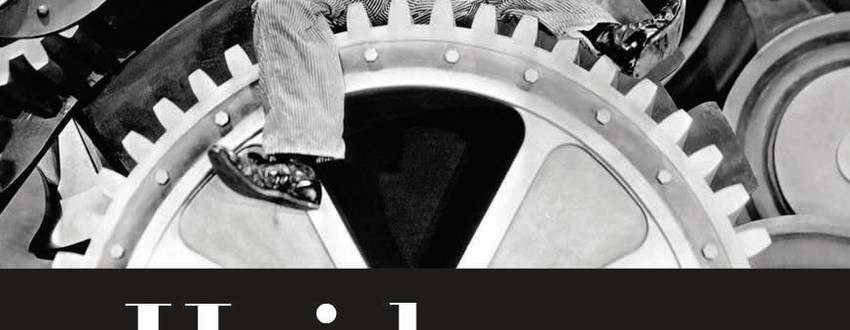
For Heidegger, modernity is more than a historical period. It is a particular way of understanding the world. Gradually, human beings cease to dwell within it and instead seek above all to master it. Nature becomes a reservoir of resources, living beings become available objects, and even human relationships risk being assessed according to their usefulness.
Jacques Attoumbré Yoboua shows that this evolution is not simply the result of scientific progress. Rather, it is rooted in the entire history of Western metaphysics. For centuries, a particular understanding of Being has prepared the emergence of a world in which everything becomes calculable, measurable, and exploitable.
This perspective goes beyond superficial critiques of technology. Heidegger does not condemn progress; he questions the way it transforms our relationship with the world.
A Philosophy That Illuminates the Present
The enduring strength of Heidegger’s thought lies in the questions it continues to raise. How can genuine freedom be preserved in a world governed by technological systems? How can we continue to encounter one another authentically when the logic of performance permeates every aspect of life? How can we inhabit the Earth without reducing nature to a mere stockpile of resources?
These questions resonate powerfully today in the face of ecological crises, digital transformation, and accelerating economic change.
Far from advocating a nostalgic return to the past, Heidegger invites us to recover another way of being present in the world. Such presence requires attentiveness, openness, and respect for what escapes mere calculation. In an age fascinated by control, this invitation to receive rather than dominate is strikingly relevant.
From Descartes to Nietzsche: Understanding the History of Modernity
One of the book’s greatest strengths is its reinterpretation of the history of philosophy.
Descartes places the thinking subject at the foundation of all certainty. Kant deepens this centrality of the subject. Nietzsche, in turn, reveals the nihilism that accompanies the collapse of traditional values.
Heidegger enters into dialogue with each of these thinkers to show that they all participate in a broader history: the gradual forgetting of the question of Being. This journey through Western philosophy enables readers to understand how our modern way of thinking about the world came into being.
Technology as a Way of Revealing Reality
One of the book’s major contributions is to dispel a common misunderstanding: Heidegger is not opposed to machines or scientific discoveries.
What he challenges is the gradual transformation of technology into the only way of understanding reality. When everything is evaluated according to efficiency alone, the world loses its symbolic, cultural, and spiritual depth.
This analysis is especially relevant today in the age of artificial intelligence, automation, and the digital economy. Heidegger’s philosophy does not provide technical solutions to these challenges; rather, it teaches us how to ask the right questions.
Inhabiting the World Rather Than Possessing It
As the book unfolds, one central idea emerges: the crisis of modernity is fundamentally a crisis in our relationship with Being. In our desire to explain, predict, and control everything, we risk losing our capacity for wonder.
Heidegger therefore invites us to learn once again how to "inhabit the world." This expression does not simply refer to a more modest lifestyle; it describes a fundamental attitude that recognizes human beings not as owners of Being, but as its guardians. To inhabit means to welcome, to listen, and to care.
Jacques Attoumbré Yoboua highlights this positive dimension of Heidegger’s thought. Often portrayed as a philosopher of pessimism, Heidegger in fact opens a horizon of hope: even in a world dominated by technology, it remains possible to recover a more authentic relationship with reality.
A Profoundly Ethical Reflection
The book also demonstrates that Heidegger’s philosophy carries profound ethical significance. When everything becomes an object of calculation, people themselves risk being reduced to their productivity or utility.
By contrast, Heidegger invites us to rediscover a more fundamental responsibility toward others, toward nature, and toward Being itself. This responsibility is not imposed externally as a moral rule; it arises naturally from the way we inhabit the world.
This perspective sheds light on many contemporary challenges, from the ecological crisis and cultural globalization to the growing dominance of economic rationality.
An Accessible Introduction to Heidegger
Approaching Heidegger can seem intimidating because of the complexity of his vocabulary. One of Jacques Attoumbré Yoboua’s great achievements is to make this philosophy accessible without sacrificing its depth. The principal concepts are explained methodically, placed in their historical context, and constantly related to contemporary concerns.
The book is therefore intended both for philosophy students and for readers who wish to gain a deeper understanding of the transformations shaping our civilization.
Rethinking the Future
Why read Heidegger today? Because the questions he raises have never been more relevant. At a time when artificial intelligence, digital technologies, and economic imperatives are reshaping our societies, it is essential to reflect on humanity’s place within this technological world.
Jacques Attoumbré Yoboua’s great achievement is to show that this reflection leads neither to a rejection of progress nor to a catastrophic vision of modernity. Instead, it invites us to recover a balance in which technological power remains at the service of the human person.
Heidegger and Modernity is therefore much more than an introduction to a major philosophical work. It is an invitation to exercise discernment, to question the foundations of our age, and above all to ask whether, in the world we build each day, we still truly know how to inhabit it.
This book is available in French.
→ Discover and purchase the book in print or digital format