




News
Heidegger and Modernity: Interview with the author Jacques Attoumbré
1 september 2026
Martin Heidegger's thought remains one of the most demanding in contemporary philosophy. Yet it sheds remarkably sharp light on the questions raised by our technological civilization. In Heidegger and Modernity, Jacques Attoumbré Yoboua offers an accessible reading of this major work. In this interview, he reflects on what led him to write the book, the enduring relevance of Heidegger's philosophy, and the challenges it poses to each of us today.
Your book offers a new reading of Heidegger. Why return today to a philosopher who is often considered difficult and far removed from our everyday concerns?
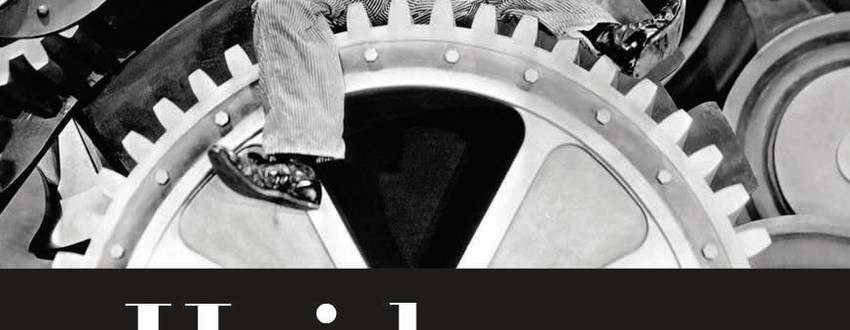
Precisely because that reputation is misleading. Heidegger is certainly demanding, but he addresses questions that concern every one of us. We live in a world where technology occupies a central place, where innovations follow one another at an unprecedented pace, and where efficiency has become an almost universal criterion. Heidegger asks about the deeper consequences of this development. He does not simply ask what technology enables us to do; he asks what it does to us.
I wanted to show that his thought does not belong to the past. It provides remarkably relevant tools for understanding the transformations of our time and for reflecting on how we wish to inhabit the world.
You frequently use the word "modernity." What does it mean in your book?
Modernity is often reduced to a historical period or to scientific progress. For Heidegger, however, modernity is above all a way of understanding reality.
We have gradually learned to regard the world as something to be organized, measured, exploited, or optimized. This way of thinking has become so familiar that it now seems perfectly natural. Yet it profoundly transforms our relationship with others, with nature, and ultimately with ourselves.
Understanding this evolution is essential if we want to recover genuine freedom in the face of the forces that shape our society.
Many people believe that Heidegger condemns technology. Is that a faithful interpretation of his thought?
No, and it is probably the most widespread misunderstanding.
Heidegger is not hostile to machines, science, or technological discoveries. He fully acknowledges their importance. What concerns him is the moment when technology ceases to be a tool and becomes the only way of interpreting the world.
When everything is assessed according to efficiency, productivity, or profitability, we risk losing other essential dimensions of existence: contemplation, gratuitousness, beauty, attentiveness, and the ability to be surprised by what is.
The real question is therefore not, "Should we reject technology?" but rather, "Do we want technology to define entirely the way we live?"
Your book also retraces the history of Western philosophy. Why take this detour through Descartes, Kant, and Nietzsche?
Because Heidegger himself never thinks in isolation. He is constantly in dialogue with the great philosophers who preceded him.
Descartes, Kant, and Nietzsche each represent a crucial stage in the development of modernity. Heidegger shows that, despite their differences, their philosophies belong to a shared history in which the question of Being gradually recedes into the background.
I wanted to make this genealogy accessible. It helps readers understand that our contemporary relationship with the world did not emerge overnight. It is the result of a long intellectual evolution.
Your book frequently connects Heidegger's thought with current concerns. Were you thinking in particular of artificial intelligence while writing it?
Artificial intelligence is certainly one of today's most striking examples, but it is only one illustration among many.
Heidegger's analyses also shed light on the digitalization of society, the exploitation of data, economic globalization, and ecological challenges.
My interest is not in presenting Heidegger as a prophet of artificial intelligence. Rather, I want to show that the questions he raises remain extraordinarily fruitful for thinking about these new realities. He invites us to step back before either celebrating or condemning technological innovations.
One expression recurs throughout your book: "inhabiting the world." What does it mean to you?
It is probably one of Heidegger's most beautiful insights.
To inhabit the world does not simply mean to live somewhere. It means recognizing that we belong to a world that precedes us and that cannot be reduced to a mere collection of available resources.
To inhabit the world implies an attitude of respect, attentiveness, and responsibility. We are not the owners of Being; we are its guardians.
Today, this idea has particular resonance in the face of ecological challenges. It reminds us that human development cannot be understood solely in terms of control and mastery.
Your reading of Heidegger places great emphasis on the ethical dimension of his work.
Yes, because this dimension is sometimes underestimated.
Heidegger is often presented as a philosopher of Being or of language. Yet his reflection also entails a particular way of living. If our relationship with the world changes, our relationship with others changes as well.
A society that reduces everything to calculation also risks reducing people to their usefulness. Conversely, recovering a more authentic relationship with Being opens the possibility of a renewed responsibility toward others, toward nature, and toward future generations.
This ethics is not expressed as a set of rules. It arises from a different way of inhabiting the world.
Who is this book intended for?
I wanted it to be accessible both to students and to a broader readership.
Many readers would like to discover Heidegger but are discouraged by the reputation of his difficult style. I have tried to offer a gradual reading that remains faithful to the texts while highlighting their concrete implications.
Philosophy should not be reserved for specialists. The great questions it raises concern anyone who seeks to understand the world in which they live.
If you had to summarize your book in a single question, what would it be?
I would put it this way: What becomes of humanity when everything becomes an object of calculation?
This question runs throughout Heidegger's philosophy and, in my view, remains strikingly relevant today.
We are capable of extraordinary scientific achievements. We continue to develop ever more powerful technologies. But such progress has meaning only if it remains at the service of the human person.
Philosophy reminds us that what matters most is not merely increasing our power to act, but understanding what it truly means to exist.
What perspective would you like readers to have on the world after finishing Heidegger and Modernity?
I do not expect readers to agree with every aspect of Heidegger's analysis—or even with my own. Above all, I hope they will take the time to ask themselves questions.
We live in a civilization that values constant acceleration. Philosophy, by contrast, invites us to slow down in order to better understand what is unfolding before our eyes.
If this book helps readers look differently at technology, nature, other people, and their own existence, then it will have achieved its purpose. Heidegger reminds us that human beings are defined not only by what they produce or master, but also by their capacity to listen, to think, and to inhabit the world responsibly. Perhaps that is, now more than ever, the true meaning of modernity.
This book is available in French.
→ Discover and purchase the book in print or digital format