




News
The Unknown Mary: Rediscovering the Woman Behind the Icon
16 september 2026
What became of Mary after the death of Jesus? In The Unknown Mary, Arnaud Maigre moves beyond familiar representations to undertake a genuine biblical and historical investigation. From Cana and the Cross to the earliest Christian communities and Ephesus, he brings to light a Mary marked by maturity, discernment, and transmission.
A familiar figure… yet still largely unknown
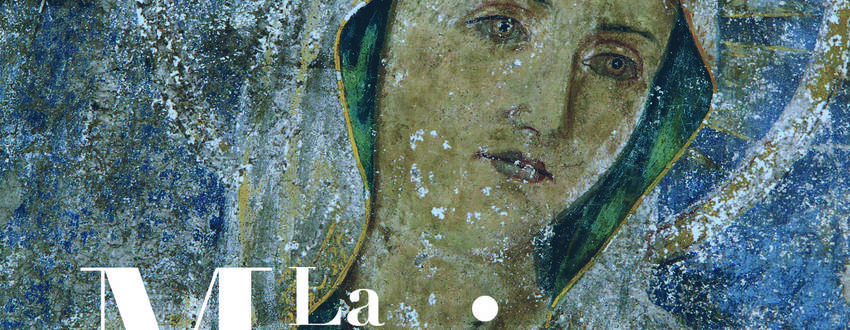
Mary is probably one of the most frequently represented figures in Christian history. Statues, frescoes, altarpieces, and icons have given a face to the young mother holding the child Jesus, the Virgin of the Annunciation, and the sorrowful woman standing at the foot of the Cross. Yet this extraordinary presence in art and devotion contrasts with Mary’s relative discretion in the texts of the New Testament.
It is this paradox that provides the starting point for Arnaud Maigre in The Unknown Mary. The author recounts how, while standing before an altarpiece, he was struck by the contrast between Mary’s visual omnipresence in churches and the relatively limited place she occupies in Scripture. This raises an inevitable question: do we really know Mary?
Rather than returning once again to the young woman of Nazareth or the mother of the child Jesus, the book focuses on another Mary: the one the author calls the “Mary of maturity.” She appears in particular at Cana and at the foot of the Cross, before a statement by Jesus opens up a crucial mystery: “Behold your mother.” John then takes her into his home. What becomes of her at his side? What kind of relationship develops between them? And could their closeness shed light on the distinctive character of the Johannine Gospel?
An investigation rather than a biography
The Unknown Mary does not seek to fill the silences of history by inventing a biography. On the contrary, Arnaud Maigre adopts an investigative approach. The book unfolds through a series of “sketches,” comparing the canonical texts with historical evidence and examining their differences, silences, and, at times, tensions.
One distinctive feature of this approach is precisely that it does not regard the divergences between the Gospels as obstacles. Instead, they become clues. The Synoptics and John do not always construct their narratives in the same way, particularly in terms of chronology. Examining their intentions, their intended audiences, and the concerns of their communities makes it possible to better understand the distinctive character of each text.
This method leads the author to explore the circle surrounding Jesus: the different women named Mary who were present at the foot of the Cross, family relationships, James, John, and the earliest Christian communities. Like an investigator, he brings together clues scattered throughout the Gospels, the Acts of the Apostles, and certain historical sources.
The reader is thus invited to enter into a process of inquiry whose conclusions are never presented as artificial certainties. The book proceeds through hypotheses, comparisons, and connections. This is also part of its originality: the questioning remains visible and becomes an integral part of the reading experience.
From Cana to the Cross: a Mary of maturity
In this rereading, Cana occupies a decisive place. Mary no longer appears simply as the person who points out that the wine has run out. Arnaud Maigre sees her as a self-assured woman, attentive to others, capable of acting freely and placing her trust in her son.
The miracle itself consequently takes on a different significance. It responds neither to a catastrophe nor to a wrong that needs to be put right. It occurs in the midst of a celebration and restores a joy that was under threat. For the author, Cana thus reveals a Mary who is attentive to the happiness of others, grounded in a serene relationship with God, and capable of a discernment that is not confined by convention.
This maturity takes on a new dimension at the foot of the Cross. Jesus entrusts his mother to the beloved disciple: “Woman, behold your son,” and then: “Behold your mother.” For Arnaud Maigre, this episode is more than a scene of filial affection. It marks a turning point in Mary’s life as well as in John’s.
The book’s central hypothesis emerges here: Mary’s presence alongside John may have profoundly nourished the spirituality that would later find expression in the Fourth Gospel. The fact that John is the only evangelist to report both certain details of the Crucifixion and the episode at Cana strengthens, in the author’s view, the relevance of this line of inquiry.
Mary at the heart of a Christianity in transformation
But The Unknown Mary gradually moves beyond the portrait of an individual. Behind Mary emerges an entire world: that of Christianity in its first decades, still in the process of finding its forms, its language, and its unity.
Communities evolve, tensions emerge, and the movement born within Judaism gradually acquires a distinct identity. Arnaud Maigre describes this development as a “metamorphosis”: the early Church is not a fixed reality, but a living organism that transforms over the course of its history.
In this context, Mary may have played a discreet but essential role in preserving memory and transmitting it to others. The question of her time with John, particularly in Ephesus, therefore takes on special significance. The author compares different traditions with historical and chronological evidence, while carefully distinguishing between what remains hypothetical and what can be established.
The aim, then, is not to uncover a secret Mary whom two millennia of Christianity have deliberately concealed. The author explicitly distances himself from this kind of sensational revelation. His ambition is more subtle: to return to the texts, identify the figures involved, compare the narratives, and bring to light connections that habitual ways of reading may have caused us to overlook.
A Mary for today’s questions
This historical investigation ultimately leads to a very contemporary question. Mary remains a figure who can bring Christians together just as much as she can divide them. Arnaud Maigre refers in particular to the Protestant perspective on a Catholic Marian devotion that can sometimes be difficult to understand. His project also grows out of this experience of dialogue: to rediscover a Mary who can be approached through Scripture itself.
The book’s back-cover text sums up the project as a rereading of Mary focused not on devotion, but on “spiritual maturation, discernment, and transmission,” drawing on the canonical texts in dialogue with historical sources.
The Unknown Mary thus invites us to shift our perspective. Behind the familiar icon emerges a woman who has reached the maturity of her life, shaped by hardship yet still capable of trust, discernment, and transmission. A Mary who may be less immediately visible, but whose very discretion may have left a profound mark on the beginnings of Christianity.
This book is available in French.
→ Discover and purchase the book in digital or print format