[Faces of Domuni] Daniel Anatole Nkala
A priest in Ntui, Cameroon, Daniel Anatole Nkala completed a Master of Arts 2 in Philosophy with the desire to study in order to understand better, and to understand in order to serve better.
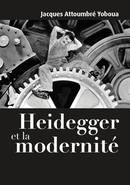
Through an accessible reading of Heidegger, Jacques Attoumbré Yoboua examines the foundations of technological modernity. He shows how Heidegger’s philosophy illuminates contemporary challenges while inviting readers to recover a more authentic, responsible, and deeply human relationship with the world.
In Réunion, theology students meet every month to enrich their studies through dialogue, the exchange of ideas, and collective reflection.
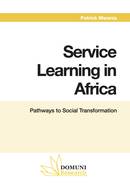
What if universities were judged not only by the quality of the knowledge they produce, but also by their ability to transform society? Patrick Mwania presents Service Learning as an educational vision rooted in community engagement, African philosophies, and Catholic thought, fostering responsibility and hope.
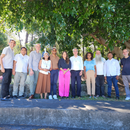
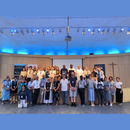
For a few inspiring days, some fifty participants from Iraq, Hong Kong, East and Central Africa, Argentina, Spain, Switzerland, Germany, Belgium, Croatia, Canada, and all across France gathered to exchange ideas, share their research and experiences, discover one another's cultures and, above all, build lasting friendships.
What if African universities measured their success not only by degrees awarded, but by the communities they help to strengthen? In Service Learning in Africa, Patrick Mwania argues that higher education can reconnect knowledge, responsibility, and social transformation by placing students in active partnership with the societies around them.
From 6 to 10 July 2026, Domuni Universitas hosted its International Summer School in Tours. Over the course of the week, professors, students and international guest speakers came together to explore a central theme: “Passing on and Creating within the Christian Tradition.”
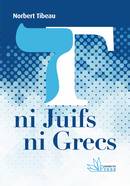
Why devote more than two hundred pages to the Epistle to the Galatians? In Neither Jews nor Greeks, Norbert Tibeau shows that this letter of Saint Paul sheds light on remarkably contemporary issues: identity, diversity, unity, freedom, and dialogue among peoples. On the occasion of the publication of his book, he reflects on the convictions that guided his research and on the enduring relevance of a text written two thousand years ago.
"There is no longer Jew or Greek." Behind this statement from the Epistle to the Galatians lies a theological revolution whose impact continues to resonate today. In Neither Jews nor Greeks, Norbert Tibeau revisits one of Saint Paul's foundational texts to show how the Christian message opens a universal horizon in which faith transcends identity, borders, and exclusion.
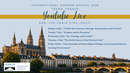
In two weeks’ time, we will gather in Tours for the International Summer School 2026, a significant occasion for encounter, reflection, and international dialogue. Simultaneous translation into English will be provided, and all sessions will remain available for replay afterwards.
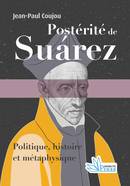
Interview with Jean-Paul Coujou about his book The Legacy of Suárez: a still-relevant thought for understanding law and power.
When Suárez illuminates our modernity: Jean-Paul Coujou brings a major thinker back to life, whose work helps us understand the roots of our debates on law, sovereignty, freedom, and peace.
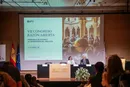
At Madrid, Dr. Marie Monnet, O.P., Rector of Domuni Universitas, inaugurates the Seventh Razón Abierta Congress dedicated to Francisco de Vitoria.
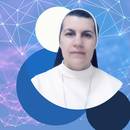
Sister Hanan reflects on this conference with Domuni’s Arabic-speaking students, which fostered an in-depth discussion on the ethics of artificial intelligence within academic, pastoral, and theological contexts.
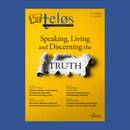
The latest issue of TELOS entitled “Speaking, Living and Discerning the Truth” is now available.
With Magnifica Humanitas (15 May 2026), Pope Leo XIV firmly situates the question of artificial intelligence within the living continuity of the Social Doctrine of the Church.
Doctor of Theology, she lives in Tucumán, Argentina, from where she participates ever more actively in the academic life and teaching mission of Domuni Universitas.
The Director of the Domuni Research Institute delivered a widely noted presentation on artificial intelligence and leadership.
An educator working with individuals with mental disabilities, Francesco Lazzari lives in Senna Comasco, Italy. A native Italian speaker, after completing several Master of Arts degrees in English at Domuni, he is currently pursuing a Master of Arts (Year 1) in Biblical Theology in Italian.
In Baghdad, Domuni Universitas signed, on 24 April, a cooperation agreement with the Congregation of the Chaldean Sisters of Mary, represented by the Superior General of the Congregation.
The Network of Universities of the Order of Preachers (UNOP–RUOP) continues to strengthen its dynamic of international collaboration among Dominican academic institutions. The first meeting of the current working cycle took place on April 22, marking the beginning of a series of gatherings aimed at shaping shared priorities for the years ahead.
Doctor of Philosophy and member of the Dominican Order, he resides in Leuven, Belgium. A specialist in Thomas Aquinas and the philosophy of religion, he travels the world to transmit his knowledge.
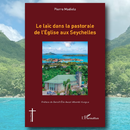
Pierre Madiela, who graduated with a Master of Arts (MA2) in Theology from DOMUNI Universitas in 2021, has published Le laïc dans la pastorale de l’Église aux Seychelles with Éditions L’Harmattan.
“He has broken down the dividing wall of hostility.” (Eph 2:14) As Easter approaches, these words of the Apostle Paul resonate with particular intensity. They do not sidestep the world’s divisions; they cut right through them.
The launch of the Jounal INTEGRAL – Journal of Integral Development marks an important milestone in the deployment of the scientific partnership between Domuni Universitas and the Catholic University of Madagascar (UCM).
(Re)discover the proceedings of a Participatory Study Day.
Holding a PhD in History, an author, and Dean of Academic Studies at a university in Hobart, Tasmania (Australia), Nick Brodie is currently pursuing a Master of Arts (MA2) in Theology, specializing in Biblical Studies (English track), at Domuni Universitas.
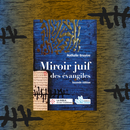
Sister Agnès recounts the encounters that inspired her book Jewish Mirror of the Gospels and explains why rereading the New Testament in light of Jewish traditions and sources is essential in contemporary theology.
Theologian, author, and professor in Harare, Zimbabwe, Dr. Isaac Mutelo O.P. is also a professor and mentor at DOMUNI, where he supports students across several continents.
Artificial intelligence is now an integral part of our intellectual environment. The Charter governing its use has entered into force at Domuni-Universitas.
Dr. Evelyne Maurice, Dean of the Faculty of Theology, reflects on the participatory study day held in Switzerland on January 31.
Meet François Anga Kupa, professor at Domuni Universitas, who introduces this new course and outlines its main challenges.
These volumes place at the center of scholarly discussion themes such as human dignity, democracy, development, artificial intelligence, and climate change within African contexts. The issues are published in English and are available in open access.
Fr. Alain-Marie de Lassus, CSJ, presents his new book The Word of Wisdom, recently published by Domuni Press.
A mini-series highlighting the individuals who shape the life of Domuni—its students, faculty, and dedicated teams. Episode 9 focuses on Susanne Möhring, an entrepreneur based in Sonndorf, Germany. A native German speaker, she is currently pursuing a Master of Arts in Philosophy at Domuni Universitas, following an extensive academic background in Theology and Religious Studies.
Contra spem, in spem. The French philosopher Gustave Thibon was fond of echoing this phrase from Saint Paul: “against hope, hope.” It expresses the idea that one can move forward without knowing everything in advance, and that guarantees are not required in order to begin. Because necessity presses upon us, because responsibility takes precedence over optimism, because a deep intuition points to a path that must be traced.
A mini-series highlighting the individuals who shape the life of Domuni—its students, faculty, and dedicated teams. Episode 8 focuses on Nadège Salzmann, a teacher of French and Latin with a strong passion for the humanities, who chose to pursue a Master’s degree in Philosophy at Domuni Universitas. The fully online format enables her to reconcile her commitment to learning and intellectual rigor with the demands of her professional and family life.
In the continuity of its academic and institutional development, Domuni-Universitas has carried out several appointments and organizational developments within its general services.
At this Christmas time, the same light reaches us and makes Domuni, far beyond an institution, a community of knowledge, dialogue, and responsibility.
A mini-series highlighting the individuals who shape the life of Domuni—its students, faculty, and dedicated teams. Episode 7 focuses on Sister Bushra Hanna, a Chaldean religious sister living in Baghdad, whose formation at Domuni, a Master’s in Pastoral Theology, has profoundly enriched her pastoral mission and her service to the Church.